
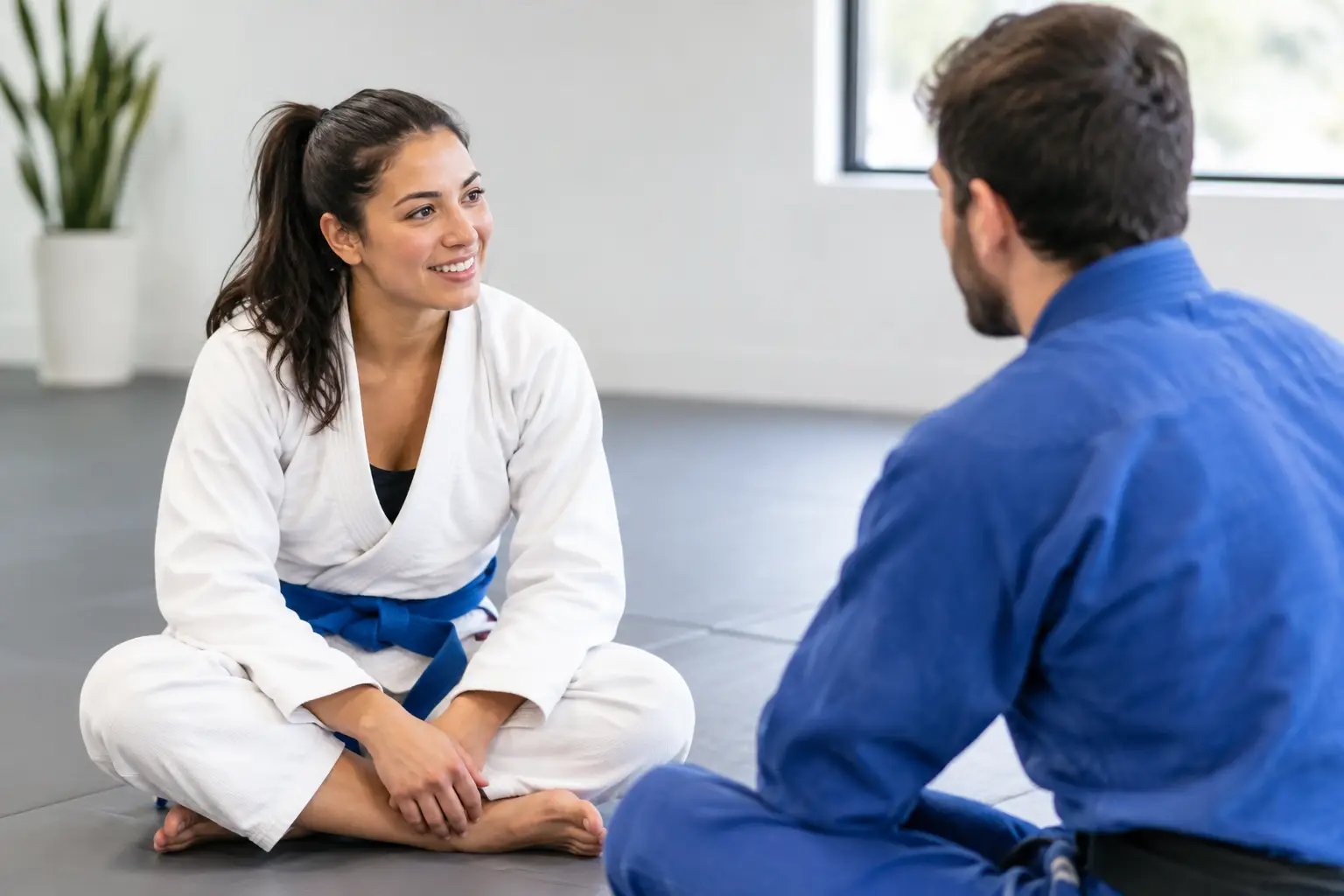
Walking into a Jiu-Jitsu academy for the first time can feel like stepping into a room where everyone else knows a language you have never heard. You may see students tying belts, practicing controlled escapes, or moving through drills with calm focus. If you are wondering what to expect at your first Jiu-Jitsu class, the short answer is this: you do not need to know anything before you arrive. You only need the willingness to learn.
Brazilian Jiu-Jitsu is challenging, physical, and deeply rewarding. It is also a skill that begins with small, practical lessons. Your first class is not a test of toughness or athletic ability. It is your introduction to a system that can strengthen your body, sharpen your decision-making under pressure, and build confidence that reaches far beyond the mat.
Expect a Welcoming Introduction, Not Immediate Pressure
A quality beginner class starts with guidance. An instructor or team member will show you where to place your belongings, explain the basic etiquette of the academy, and help you understand what you will be doing that day. If you are attending a trial class, arrive a few minutes early so you have time to ask questions and settle in.
You may be asked to sign a waiver and share any injuries, physical limitations, or concerns. Be honest. Jiu-Jitsu is adaptable, and a good coach can offer modifications when needed. Starting in your 30s, 40s, or 50s is common. So is arriving with little recent exercise experience. The goal is to train intelligently and consistently, not prove something on day one.
At Winners Jiu-Jitsu Academy, beginners are guided through the first steps in an environment built for progress, whether the goal is fitness, practical self-defense, stress relief, or long-term competition.
What to Wear and Bring to Your First Class
For a Gi Jiu-Jitsu class, the academy may provide a uniform for your trial or let you know what is available before you arrive. A Gi is the traditional jacket and pants worn for Brazilian Jiu-Jitsu. If you do not have one yet, wear comfortable athletic clothing that covers your legs and shoulders unless the academy tells you otherwise.
For a No-Gi class, a fitted athletic T-shirt or rash guard and athletic shorts without pockets are usually appropriate. Avoid loose clothing, jewelry, watches, or anything that can catch on a training partner. Bring water and flip-flops or slides for walking off the mat. Shoes stay off the training surface to help keep it clean.
Trim your fingernails and toenails before class. It is a small detail, but it matters for everyone’s comfort and safety. Good hygiene is part of the respect Jiu-Jitsu students show one another.
Your First Jiu-Jitsu Class Starts With Movement
Most classes begin with a warm-up. This may include light jogging, hip movements, shoulder mobility, shrimping, bridging, technical stand-ups, and other exercises that prepare your body for grappling. Some of these movements may feel unfamiliar at first. That is normal.
A technical stand-up, for example, teaches you how to rise from the ground while protecting yourself. Shrimping is a hip escape used to create space against an opponent. These are not random exercises. They are foundational movements that appear again and again in self-defense and live training.
Do not worry if you cannot copy every movement perfectly. Focus on listening, moving safely, and asking for help when you need it. Coordination improves quickly when you give yourself permission to be a beginner.
You Will Learn a Few Techniques, Not Everything at Once
After the warm-up, the instructor will demonstrate one or more techniques. Your first lesson might cover how to break a fall safely, escape from underneath someone, control distance, defend a simple grip, or apply a basic position.
The coach will usually show the movement in stages, then pair students up to practice. This is where Jiu-Jitsu becomes especially different from a workout class. You are learning through cooperation. Your partner is not there to overpower you while you are drilling. Both of you are there to repeat the technique carefully enough to understand the details.
It can feel awkward at first because grappling requires close contact. Most new students adjust faster than they expect. The academy culture matters here: training partners should be respectful, controlled, and aware that you are new. If something feels too intense, communicate. A simple “Can we go lighter?” is always appropriate.
Will You Have to Spar on Day One?
This depends on the academy, the class format, and your own comfort level. Sparring, often called rolling in Jiu-Jitsu, is controlled live practice. It is where students test techniques against a resisting partner, but it should not resemble a street fight or a contest of strength.
Many beginner programs do not require first-day students to roll. Others may offer light positional sparring, where you begin in a specific position with a limited goal. If you do roll, tell your partner that it is your first class. Experienced students should adjust their pace and help you learn safely.
The most valuable first-day habit is knowing how to tap. Tapping means physically signaling that you want your partner to stop, usually by tapping them or the mat several times. You can also say “tap” if your hands are unavailable. Tap early, tap clearly, and never feel embarrassed about it. A tap is not failure. It is intelligent training and mutual trust in action.
Expect to Feel Challenged in a New Way
Jiu-Jitsu uses muscles, grips, and movement patterns that many people do not use in daily life. You may leave class feeling tired in your forearms, core, hips, or upper back. You may also notice that the mental challenge was just as demanding as the physical one.
That is one reason people stay with the art. Jiu-Jitsu asks you to solve problems while remaining calm. When someone applies pressure, you learn not to panic. When a technique fails, you learn to adjust. When you are tired, you learn to make better decisions instead of rushing.
The first few classes can bring soreness, especially if you have been inactive. Give yourself time to recover, drink water, eat well, and return at a pace your body can handle. Training two or three times a week is a strong starting rhythm for many adults, but consistency matters more than speed.
What Parents Can Expect From a Child’s First Class
For children, the first Jiu-Jitsu class should feel structured, energetic, and safe. A great kids program does more than teach holds and positions. It teaches listening, body awareness, boundaries, persistence, and respect for teammates.
Younger children may begin with games and movement activities that develop balance, coordination, and attention. Older students will spend more time on technique, controlled partner drills, and age-appropriate situational skills. Instructors should clearly separate discipline from intimidation. A child does not need to be naturally outgoing or athletic to benefit.
Some children jump onto the mat immediately. Others need a class or two to observe, warm up to the group, and find their confidence. Both reactions are completely normal. The right environment gives children clear expectations while helping them feel seen and supported.
Leave Your Ego at the Door and Your Questions Open
The fastest way to enjoy your first class is to release the idea that you need to perform well. You will not remember every term. You may mix up right and left. Someone smaller than you may use a technique that makes you realize strength is only one part of the equation.
That is not a reason to feel discouraged. It is the beginning of understanding why Brazilian Jiu-Jitsu works. Progress comes through repetition, patience, and humility. Each class gives you another chance to become more capable than you were before.
Ask practical questions before you leave: which classes are best for beginners, whether you need a Gi, how often to train, and what your next step should be. The right academy will give you a clear path rather than making you guess.
Your first class may leave you sweaty, tired, and outside your comfort zone. It may also leave you standing a little taller. Show up curious, train with respect, and give yourself enough time to see what consistent effort can build.