
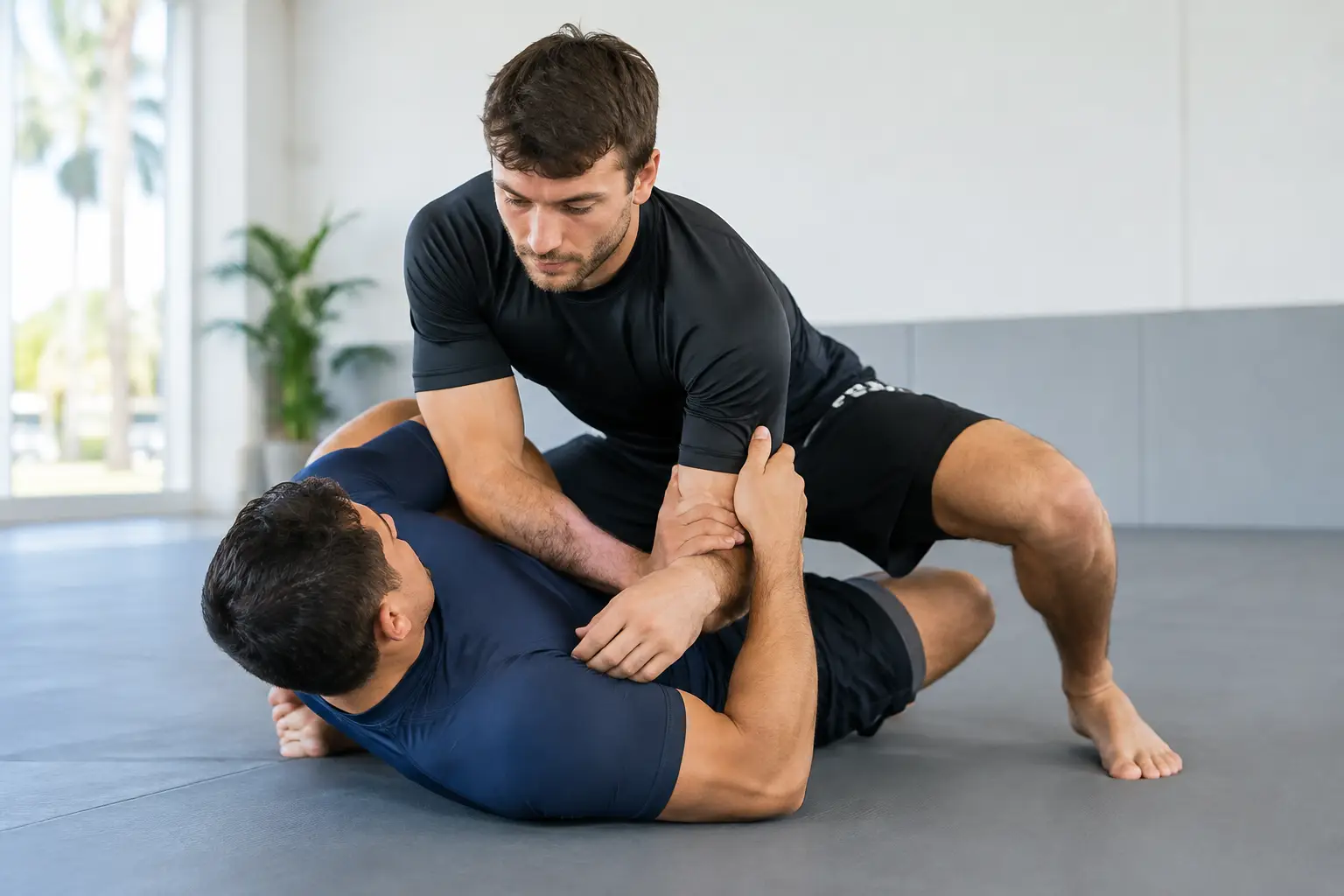
A No-Gi class moves fast. There are no lapels or sleeves to slow the exchange, so students learn to manage distance, control the body, defend takedowns, and make clear decisions when pressure rises. For adults looking for No-Gi Jiu-Jitsu classes Miami residents can take seriously without feeling out of place on day one, that combination is the appeal: practical grappling, demanding fitness, and a skill set that rewards calm thinking.
No-Gi Brazilian Jiu-Jitsu is not reserved for seasoned athletes or future competitors. It is a disciplined practice for the professional who needs a stronger outlet after work, the beginner who wants real self-defense awareness, and the experienced grappler ready to sharpen a faster, more dynamic style. The right academy gives each student a path forward, not a room where beginners are expected to figure everything out alone.
What Makes No-Gi Jiu-Jitsu Different?
Brazilian Jiu-Jitsu is built around leverage, position, timing, and control. Students learn how to use technique to manage a larger or stronger opponent, often taking the fight to the ground where striking is limited and control becomes critical. In traditional Gi training, practitioners wear a uniform jacket and pants that create grips for sweeps, submissions, and control.
No-Gi training removes those fabric grips. Students typically train in a rash guard and shorts, using grips on the head, arms, legs, torso, and body position instead. The result is a quicker pace and a different set of problems to solve. Opponents can slip away more easily, which makes posture, pressure, balance, and connection especially important.
That does not make No-Gi better than Gi Jiu-Jitsu for every person. Gi training develops valuable precision, patience, and grip-based control. No-Gi often feels more familiar to people interested in wrestling, mixed martial arts, or practical self-defense situations where an opponent may not be wearing a heavy jacket. Many students benefit from training both. The best choice depends on what keeps you consistent and what goals matter most to you.
Why Adults Choose No-Gi Jiu-Jitsu Classes in Miami
Miami life can be demanding. Long workdays, traffic, family obligations, and the pressure to stay healthy can leave exercise feeling like another task on the calendar. No-Gi Jiu-Jitsu gives training a purpose beyond burning calories. Every class asks you to be present, solve problems, and improve a skill that you can measure over time.
The physical benefits are clear. You will build grip strength, core stability, mobility, cardiovascular endurance, and body awareness. But the deeper change often happens in your mindset. When you learn to stay composed while someone is trying to control your movement, everyday stress can feel more manageable. You begin to trust your ability to pause, assess, and act with intention.
For beginners, this can be especially powerful. You do not need a background in martial arts, elite flexibility, or a certain body type to start. You need the humility to learn and the consistency to return. The first few classes may feel unfamiliar, but the learning curve is part of the process. A quality instructor breaks techniques into manageable details and pairs students appropriately so training is challenging without becoming reckless.
A Better Kind of Fitness Routine
Running, lifting, and group fitness classes can all be valuable, but some people lose motivation when every workout feels the same. No-Gi Jiu-Jitsu keeps your mind engaged. One day you may work on escaping side control. Another day may focus on defending a takedown, passing the guard, or controlling an opponent from the back.
You still work hard, but you are building a language of movement. Progress shows up when a position that once felt impossible becomes familiar. It shows up when you can complete another round without panicking, when your balance improves, or when you recognize a problem before it becomes a bad position.
Practical Skills Without False Confidence
Self-defense is not about promising that one technique solves every dangerous situation. Real safety starts with awareness, avoidance, de-escalation, and the ability to leave when possible. Still, if physical contact cannot be avoided, knowing how to maintain balance, control distance, escape a hold, and get back to your feet matters.
No-Gi Jiu-Jitsu develops those skills through live, supervised practice. Rather than memorizing movements in the air, students learn how techniques feel against resistance. Training builds confidence, but it should be honest confidence - earned through repetition, sound coaching, and respect for the unpredictability of real conflict.
What to Expect in Your First Class
A first No-Gi class should feel organized, not intimidating. You will usually begin with movement-based warm-ups that prepare your hips, shoulders, neck, and core for grappling. From there, the coach demonstrates a position or technique, explains the key details, and gives students time to practice with a partner.
The final portion may include positional sparring or live rolling, depending on your experience level and the class format. New students are not expected to perform like competitors. Your job is to listen, move safely, ask questions, and learn how to control your breathing when the pace increases.
Wear athletic shorts without pockets or zippers and a fitted T-shirt or rash guard. Bring water, keep your nails trimmed, and arrive ready to learn. Hygiene matters in any close-contact sport, and a clean, professional academy takes that responsibility seriously.
If you are concerned about being older, out of shape, or inexperienced, say so before class begins. Good coaches want that information. They can help you choose a safe pace, connect you with supportive partners, and make sure your first experience builds confidence instead of anxiety.
How Often Should You Train?
Two classes a week is an excellent starting point for most adults. It provides enough repetition to retain what you learn while allowing your body time to adapt. Students who want faster progress may train three or four times weekly, but more is not always better if recovery, work, or family responsibilities start to suffer.
Consistency wins. Training twice a week for six months will do more for your skill and conditioning than attending every day for two weeks and disappearing because you are exhausted or injured. As your movement improves and your body adapts, you can adjust your schedule with confidence.
For competitors, No-Gi training can become a more focused performance plan involving positional rounds, takedown work, conditioning, strategy, and recovery. At Winners Jiu-Jitsu Academy, students can train in an environment shaped by championship experience while still receiving the guidance needed to develop at their own level.
Choosing the Right No-Gi Academy
Not every No-Gi program offers the same experience. Credentials matter, but so does the daily culture on the mat. You want coaches who can explain why a technique works, correct students without ego, and create a room where hard training and mutual respect exist together.
Look for structured classes, clear safety standards, and training partners who understand that control matters more than trying to win every round. A competitive room can be an outstanding place to grow, provided beginners are coached well and advanced students lead by example.
It also helps to choose an academy where your goals are understood. Some students want a reliable way to get fit and reduce stress. Others want self-defense skills, belt progression, or a route into competition. Those goals can coexist when the program is organized and the coaching is personal.
The most valuable first step is simple: show up, learn one position, and come back. Over time, No-Gi Jiu-Jitsu becomes more than a workout. It becomes a practice of composure, discipline, and courage that stays with you long after class ends.