
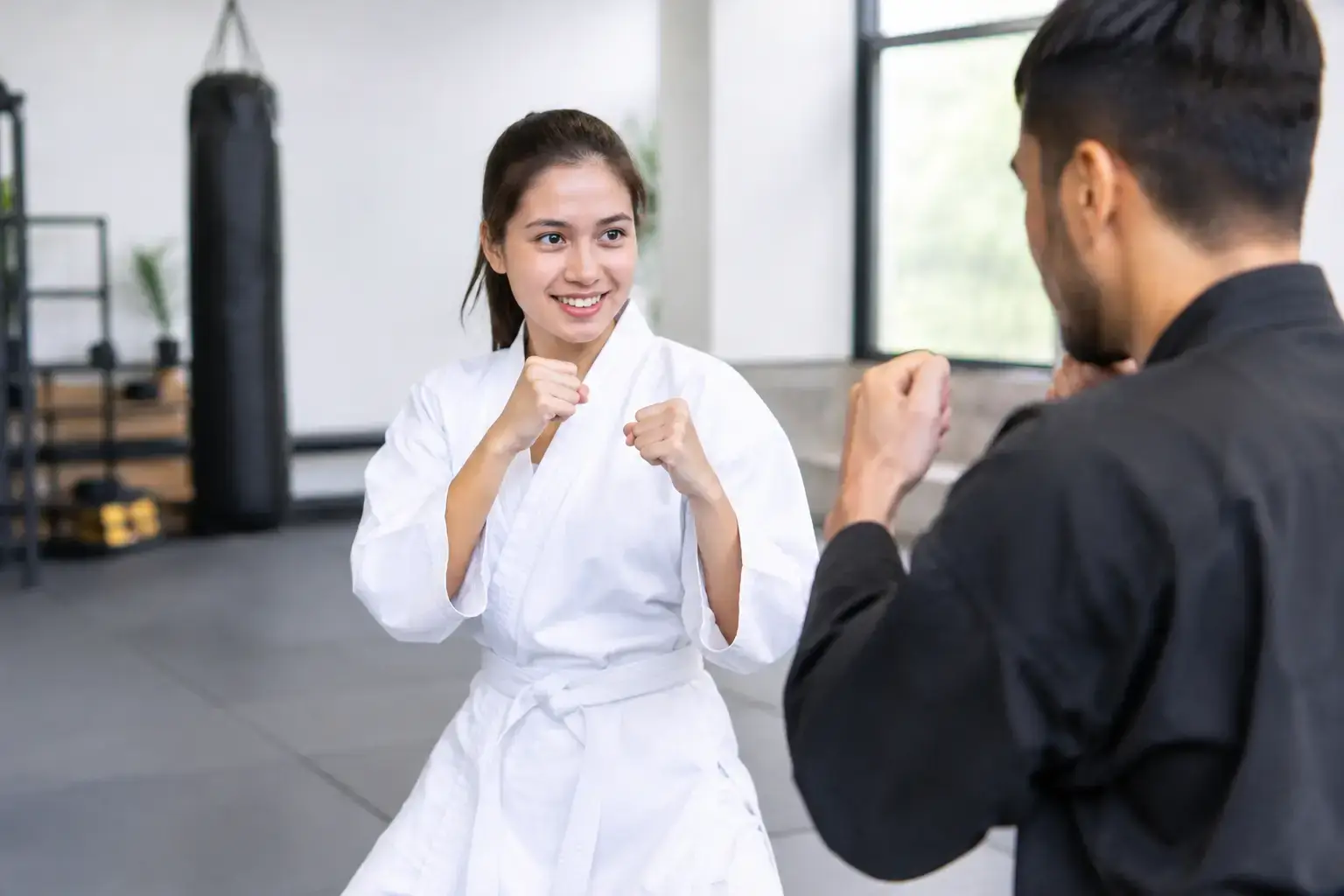
Walking into a martial arts academy for the first time can feel bigger than it should. You may be wondering whether you will be fit enough, whether your child will listen, or whether everyone else will already know what to do. This martial arts trial class guide will help you arrive prepared, understand what you are seeing, and focus on the signs that a program can help you or your child grow.
A great first class is not a test of toughness. It is an introduction to a new skill, a new routine, and a community that should challenge people while making beginners feel supported. Whether you are an adult seeking fitness and practical self-defense or a parent looking for a positive outlet for your child, the right academy meets you at your starting point and gives you a clear path forward.
Before Your Martial Arts Trial Class
The most useful preparation is simple: wear comfortable athletic clothing, bring water, and arrive a few minutes early. Most academies can provide any specialized equipment needed for a first visit, such as a Gi for Brazilian Jiu-Jitsu. Avoid jewelry, keep fingernails and toenails trimmed, and let the instructor know about injuries, physical limitations, or relevant medical concerns before class begins.
Adults often worry that they need to get in shape before trying martial arts. That is backward. Training is where you build the conditioning, coordination, and confidence you are looking for. A thoughtful coach can scale drills to your current fitness level, whether you have been active for years or are returning to exercise after a long break.
Parents can help children by framing the trial as an opportunity rather than a performance. Tell your child they do not need to be the strongest, fastest, or most experienced person in the room. Their job is to listen, try, and be respectful. That mindset leaves room for real progress.
What a Good First Class Should Feel Like
A well-run martial arts class has structure. Students should be welcomed, shown where to place their belongings, and introduced to basic academy rules. The coach should explain the day’s lesson in language beginners can understand, demonstrate movements clearly, and supervise practice closely.
In Brazilian Jiu-Jitsu, a beginner class may include a warm-up, movement drills, a technical lesson, and controlled partner practice. You might learn how to fall safely, create space, escape a basic position, or use leverage instead of strength. Beginners are not expected to know the terminology immediately. The goal is to begin developing body awareness and calm decision-making under pressure.
For kickboxing, a first class may focus on stance, footwork, basic punches, defensive movement, and pad work. A quality program emphasizes control and proper mechanics before speed or power. Hard sparring should never be the entry point for a newcomer.
For children, instruction should be active but organized. Young students need clear boundaries, short demonstrations, repetition, and positive correction. The best kids programs teach more than physical techniques. They reinforce listening, patience, emotional control, and the confidence to keep trying after a mistake.
You should leave feeling challenged, not overwhelmed or ignored. A little nervousness and physical fatigue are normal. Feeling pressured to prove yourself, train through pain, or take unnecessary risks is not.
Questions to Ask During a Trial Visit
The trial class is also your chance to evaluate the academy. Pay attention to how instructors teach, how experienced students treat newcomers, and how the room feels when people make mistakes. A championship-level academy can still be welcoming. In fact, elite coaching should make the learning environment more organized, not more intimidating.
Ask how the program is structured for your age, experience, and goals. Adults interested in stress relief and fitness may need a different weekly plan than someone preparing for competition. A child who is shy may benefit from patient encouragement and consistent routines, while a child with competitive goals may eventually need additional technical training.
It is also reasonable to ask about class sizes, instructor supervision, belt progression, hygiene standards, and how the academy handles safety. In grappling programs, clean mats and clean uniforms matter. So does a culture where partners train with control and respect.
For parents, observe whether coaches learn children’s names, redirect behavior calmly, and make sure smaller students are paired appropriately. Watch how your child responds after the initial nerves fade. They do not need to look perfect. Curiosity, effort, and a willingness to return are stronger signals than immediate technical ability.
How to Choose the Right Martial Arts Program
The right style depends on what you want from training. Brazilian Jiu-Jitsu is especially valuable for people who want a practical, technique-based approach to self-defense that develops composure in close-range situations. It is also a deeply engaging long-term practice because students continually solve new physical and strategic problems.
Kickboxing offers a high-energy route to conditioning, striking skills, coordination, and stress relief. Self-defense training may be the better fit for someone who wants focused instruction on awareness, boundaries, and practical responses. Many students benefit from combining programs over time, but there is no need to rush. Consistency in one program will produce more than occasional training in several.
For children, age-specific classes are more than a convenience. A 3-year-old learns differently from a 10-year-old, and their physical, emotional, and social needs are different. Programs divided into appropriate age groups allow coaches to set realistic expectations while still building discipline and confidence.
Consider the academy’s long-term culture as carefully as the first lesson. You want a place where your child can mature through challenges or where you can keep training through busy work seasons. Look for a schedule you can sustain, instructors who can explain a progression, and teammates who make accountability feel encouraging rather than uncomfortable.
At Winners Jiu-Jitsu Academy, students train under a system shaped by high-level competitive experience while receiving guidance appropriate to their individual goals. That combination matters because a beginner deserves sound fundamentals, and an ambitious athlete deserves a path that does not stop at the basics.
What to Expect After the Trial Class
You may feel sore after a first class, especially if you have not trained recently. That is normal, but sharp pain, dizziness, or lingering joint pain is a reason to speak with a medical professional and the coach before returning. Recovery includes hydration, sleep, gentle movement, and resisting the urge to judge your potential based on one workout.
The first few weeks are usually about building familiarity. You will learn how class flows, how to work with a partner, and how to move with more intention. Adults often notice early improvements in energy and stress management before they feel technically skilled. Children may begin showing greater focus at home, more comfort speaking up, or more resilience when something does not go their way.
Progress is rarely a straight line. Some classes will feel natural; others will expose a weakness you did not know you had. That is part of martial arts training. The skill is not avoiding difficult moments. It is learning to respond to them with patience, discipline, and a clear mind.
A Trial Class Is About More Than a Workout
A martial arts trial class should give you evidence, not pressure. You should see whether the instruction is clear, whether safety is taken seriously, and whether the environment brings out your best effort. For adults, that may mean discovering a demanding practice you can maintain for years. For children, it may mean finding a place where confidence is earned one respectful, focused class at a time.
Come ready to learn, ask honest questions, and give yourself permission to be new. Every skilled martial artist once stood at the edge of the mat wondering if they belonged. The answer is built through the decision to step forward and try.