
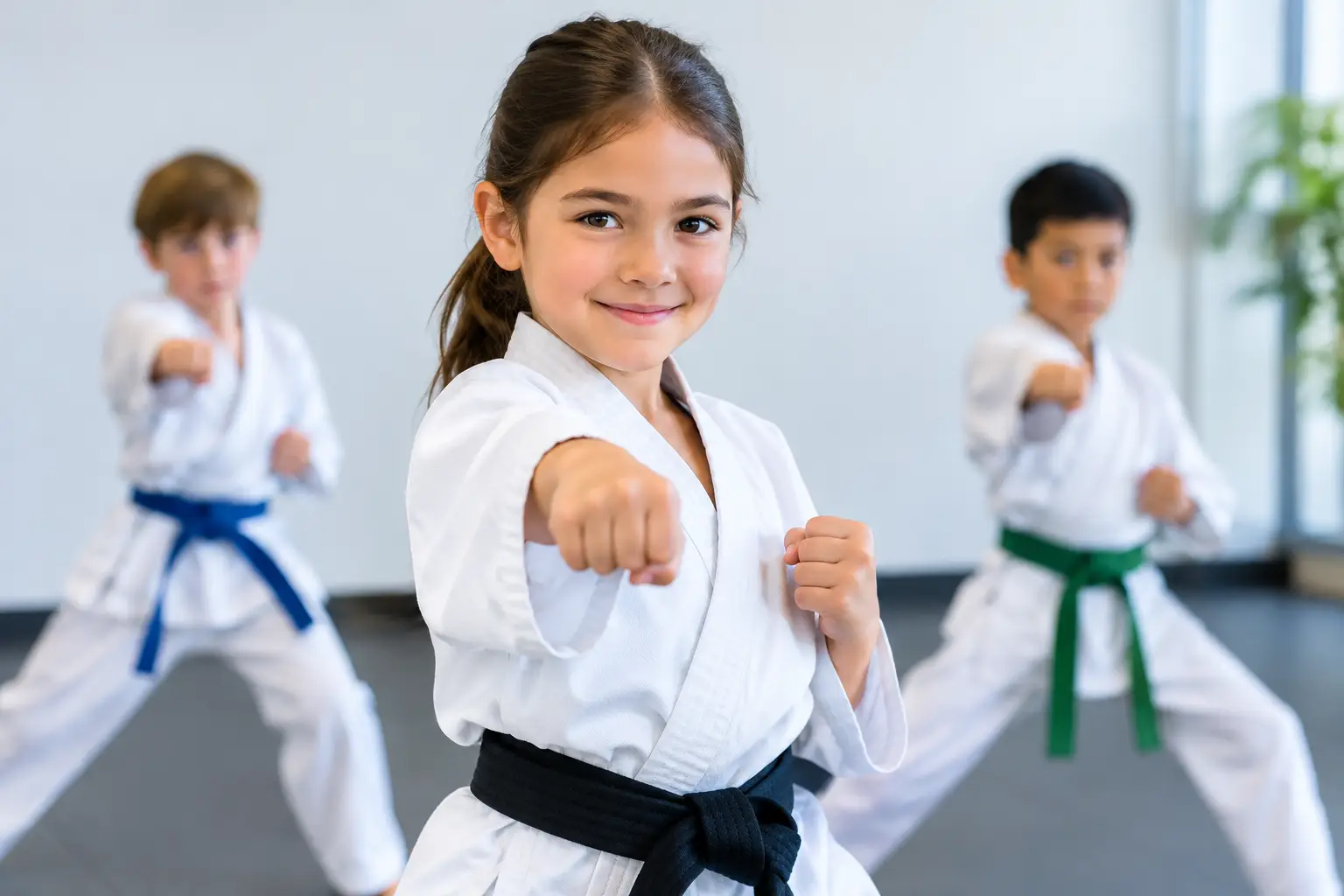
A child who hesitates to speak up in class can look very different after a few months on the mat. Not because kids martial arts turn children into aggressive fighters, but because good training gives them repeated proof that they can listen, learn, recover from mistakes, and handle challenges without quitting.
For parents in Sunny Isles Beach and the surrounding Miami-Dade area, the question is rarely whether activity is good for a child. The real question is which activity will help them grow with the right structure, safety, and guidance. A quality martial arts program should build more than coordination and conditioning. It should help children develop self-respect, composure, discipline, and the confidence to make better decisions when pressure rises.
What Kids Martial Arts Should Teach Beyond Kicks and Throws
The best kids martial arts classes are not childcare with uniforms. They are organized learning environments where every drill has a purpose. Children learn how to line up, follow directions, work with a partner, take turns, and stay focused even when they would rather rush ahead.
That structure matters because confidence is not simply praise. Real confidence comes from competence. A child learns a movement, struggles with it, receives coaching, tries again, and eventually sees improvement. That process teaches a powerful lesson: effort and attention can change the outcome.
Brazilian Jiu-Jitsu is particularly valuable for children because it emphasizes control, positioning, timing, and problem-solving. Instead of relying on size or strength, students learn how to stay calm, create space, protect themselves, and work toward a safe solution. For a smaller or quieter child, that can be a meaningful shift in how they see themselves.
Martial arts also provide a healthy outlet for energy. Kids spend much of the day sitting, concentrating, and following routines. Training lets them move with purpose while developing balance, mobility, coordination, and body awareness. They leave class having worked hard, but with a clearer understanding of how to control their energy rather than letting it control them.
The Right Program Depends on Your Child's Age
A 3-year-old, a 7-year-old, and an 11-year-old do not learn the same way. Programs that group children by development stage can teach more effectively and create a better experience for everyone in the room.
Ages 3-4: Building comfort and coordination
For younger children, the first goal is often learning how to participate in a group class. They practice listening, taking turns, moving safely, and completing simple tasks. Martial arts drills should feel engaging and age-appropriate, with short instructions, positive reinforcement, and plenty of movement.
At this stage, progress may look simple: a child enters class without tears, follows a coach's direction, or completes a drill independently. Those are meaningful wins. They build the foundation for confidence and classroom readiness.
Ages 5-7: Learning focus and respectful habits
As children grow, they can begin retaining more technique and understanding why rules matter. They learn that training partners deserve care and respect, that safety comes before winning, and that showing up consistently leads to improvement.
This is also an ideal age to introduce the idea that discipline can be positive. Discipline is not punishment. It is the habit of doing what helps you improve, even when something feels new or difficult.
Ages 8-12: Developing resilience and practical awareness
Older children can handle more detailed technical instruction, partner drills, and goal-setting. They begin to understand how movements connect and why remaining calm gives them an advantage. They can also learn practical concepts related to boundaries, verbal awareness, and avoiding unnecessary conflict.
For this age group, martial arts can become a powerful counterbalance to school pressure, social challenges, and screen time. The mat becomes a place where effort is visible, progress is earned, and a difficult round is an opportunity to learn rather than a reason to shut down.
Safety Is a Standard, Not an Extra
Parents should expect a kids program to be supervised closely, taught by qualified coaches, and organized around age-appropriate instruction. Children should not be thrown into advanced techniques, uncontrolled sparring, or situations where winning matters more than learning.
In Brazilian Jiu-Jitsu, safety begins with teaching control. Students learn how to move with partners, recognize when to stop, and respect boundaries. Coaches should actively pair students thoughtfully, correct unsafe behavior early, and maintain a clean, professional training space.
There is a trade-off worth understanding. A program that is too casual may keep children entertained but fail to create meaningful growth. A program that is too intense or poorly supervised can overwhelm beginners. The right academy combines clear standards with patient coaching, so children are challenged without being intimidated.
At Winners Jiu-Jitsu Academy, children are guided through age-specific instruction designed to help them progress from their first class with support, structure, and high-level coaching. The objective is not to pressure every child into competition. It is to give each student a path toward greater confidence and capability.
Can Martial Arts Help With Bullying?
Martial arts can help children respond to bullying more effectively, but parents should be realistic about what that means. The goal is not to teach a child to fight at school. A strong program teaches awareness, posture, distance, verbal boundaries, and the judgment to get help from an adult whenever possible.
Confidence often changes how a child carries themselves. A student who stands upright, makes eye contact, and speaks clearly may be less likely to be viewed as an easy target. Just as important, training gives children a calm place to practice handling discomfort. They learn that being challenged does not mean they are helpless.
If physical contact cannot be avoided, children benefit from understanding how to protect themselves, create space, and disengage. Brazilian Jiu-Jitsu is especially relevant here because it teaches control at close range without framing every problem as a striking exchange. Still, self-defense training works best alongside honest communication with parents, teachers, and school administrators.
What a First Class Usually Feels Like
Many parents worry their child will be behind, too shy, too energetic, or unable to pay attention for a full class. Those concerns are common, and a good introductory experience accounts for them.
A first class should begin with a coach welcoming the child and explaining the basic expectations. They may warm up through movement games or simple exercises, practice foundational positions, and work through a beginner-friendly drill with guidance. The child does not need prior experience, special athletic ability, or a competitive personality to start.
Some children jump in immediately. Others need a class or two to observe, settle in, and build trust. Neither response predicts long-term success. What matters more is consistent attendance and a coaching environment that recognizes individual personalities while holding clear expectations.
Parents can help by avoiding pressure after class. Instead of asking, “Did you win?” try asking what was fun, what felt hard, or what they learned. This keeps the focus on growth rather than performance and reinforces the mindset that mistakes are part of training.
Progress Is More Than a Belt Color
Belts and promotions can be motivating, especially for children who enjoy clear goals. But the most important changes often show up away from the academy. A parent may notice their child uses a stronger voice, handles frustration with more patience, keeps trying after a setback, or becomes more responsible about routines at home.
These changes do not happen after one class. They are built through repetition. Training once or twice a week can create real progress when children attend consistently and feel connected to their coaches and teammates. More frequent training may suit a child who loves the sport or has competitive goals, but consistency is more valuable than forcing a schedule that creates burnout.
The right martial arts program gives your child a place to work hard, feel supported, and discover what they can do. Let their first step be small: show up, listen, try. Over time, those simple habits can become the confidence they carry into school, friendships, and every challenge that waits beyond the mat.