
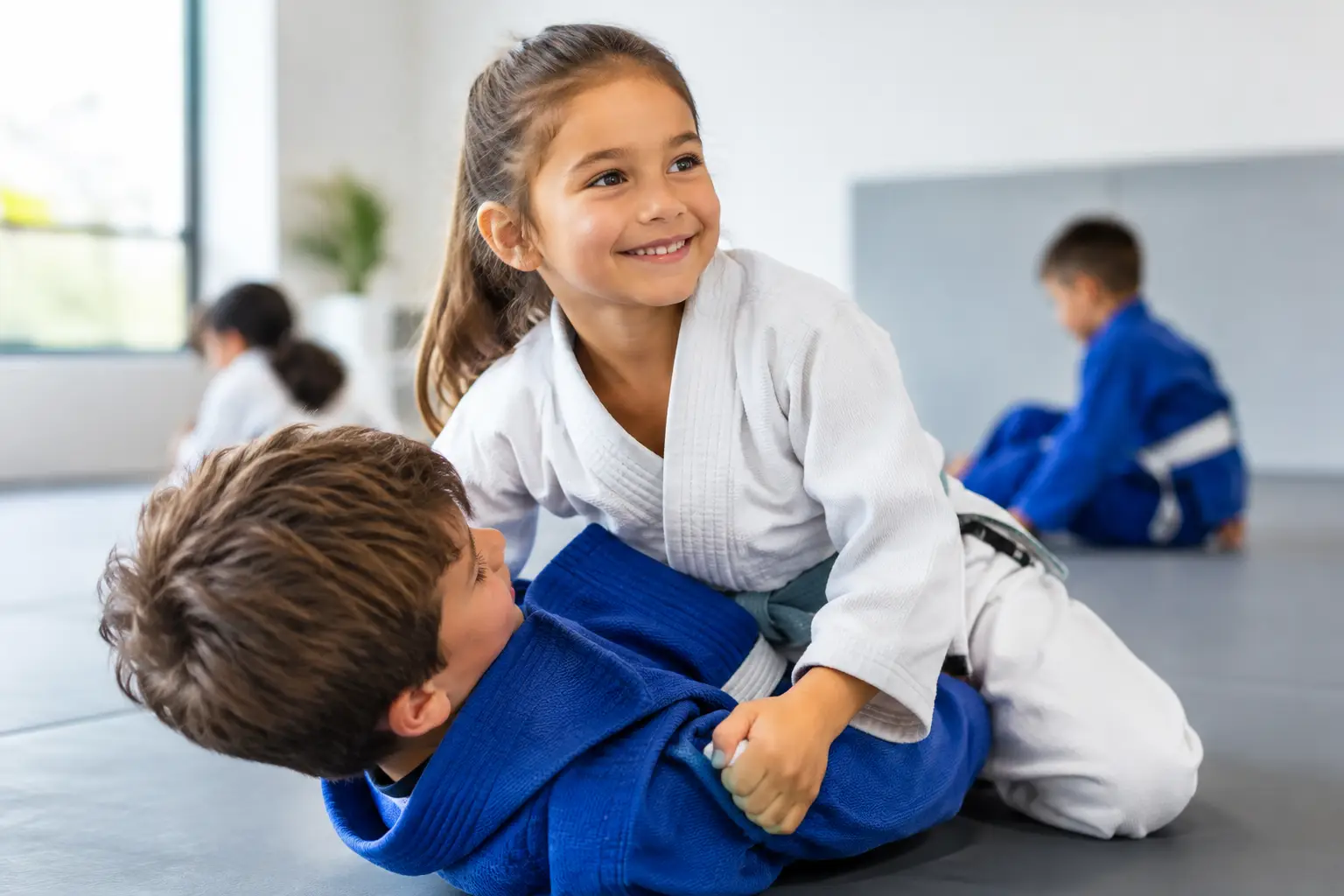
An 8-year-old is old enough to notice pressure. It might show up as a difficult school assignment, a disagreement with friends, a new team, or the fear of speaking up when something feels wrong. Jiu-Jitsu training for 8 year olds gives children a healthy place to meet those moments head-on - with guidance, movement, and a clear process for improving.
At this age, children are ready for more than running drills and burning energy. They can learn technique, follow a sequence, work respectfully with a partner, and begin to understand that steady effort produces real results. Brazilian Jiu-Jitsu gives them a challenge they can feel in every class, along with the encouragement to keep trying when a movement does not work the first time.
Why age 8 is a strong time to start Jiu-Jitsu
Eight-year-olds are developing better coordination, focus, and awareness of other people. They can listen to instruction, remember details, and apply feedback without needing every lesson to feel like a game. That does not mean training should become overly serious. The best kids' classes still use engaging drills and a positive atmosphere. The difference is that students can now begin building real technical foundations.
In Brazilian Jiu-Jitsu, those foundations include balance, posture, safe falling, movement on the ground, positional awareness, escapes, and basic control. Students learn that size is not the only advantage. Timing, leverage, calm thinking, and good habits matter too.
That lesson reaches beyond the mat. A child who sees that practice improves a difficult skill starts to approach other challenges differently. Instead of saying, “I can’t do this,” they learn to ask, “What should I try next?”
What Jiu-Jitsu training for 8 year olds looks like
A quality class for this age group is structured, active, and closely supervised. Students usually begin with movement-based warmups that improve coordination and prepare their bodies for training. From there, the instructor introduces one or two techniques in manageable steps.
For example, a class may focus on how to maintain balance while standing, how to escape from underneath a partner, or how to control space without using unnecessary force. Children practice with partners of similar size and experience whenever possible. Coaches watch closely, correct details, and reinforce the rules that make training safe.
The final part of class may include positional training or controlled sparring. This is not a free-for-all. It is a supervised way for students to test what they have learned while practicing composure. They discover that getting stuck is not a reason to panic. It is a reason to breathe, think, and use the next technique.
That experience is one reason Jiu-Jitsu can be so valuable for children. The mat offers immediate feedback, but it also gives every child another chance to reset and improve.
Technique matters more than roughness
Parents sometimes worry that Jiu-Jitsu will encourage fighting. A well-run program teaches the opposite. Students are taught respect, self-control, and responsibility from the first class. They learn to use techniques only in training or in situations where personal safety is genuinely at risk.
Because Brazilian Jiu-Jitsu emphasizes control and leverage, children do not need to be the strongest or most aggressive person in the room to make progress. This can be especially meaningful for a child who is smaller, quiet, or still finding their place socially. They gain confidence from capability, not from intimidation.
The benefits parents often notice first
Physical fitness is part of the picture. Jiu-Jitsu develops balance, coordination, mobility, body awareness, and conditioning in a way that feels purposeful rather than repetitive. For many children, training is a welcome break from screens and sitting still.
But the changes parents notice most often are behavioral. A child may become more comfortable making eye contact, following through on commitments, or recovering after a disappointing day. They learn to listen when a coach is speaking, treat training partners with respect, and stay engaged when something feels challenging.
Confidence is often misunderstood as being loud or fearless. Real confidence is quieter. It is the ability to walk into an unfamiliar room, accept correction, and trust that effort will carry you forward. Jiu-Jitsu gives children repeated opportunities to build that kind of confidence.
It can also support anti-bullying awareness. Children should always seek help from trusted adults when they are being bullied. Training does not replace conversations with parents, teachers, or school administrators. What it can provide is stronger posture, greater situational awareness, emotional control, and practical skills for creating space and getting to safety if physical contact occurs.
How often should an 8-year-old train?
For most beginners, two classes per week is an excellent starting point. It gives children enough repetition to remember what they are learning while leaving room for school, family time, other sports, and rest. Consistency matters more than trying to do too much too soon.
Some children quickly ask to train three or more times each week, especially once they make friends and begin seeing progress. That can be a great fit if they remain enthusiastic, recover well, and can maintain balance with their other responsibilities. Other children need a slower start before martial arts becomes part of their routine.
Parents should look for steady engagement rather than perfection. A child does not need to win every round or learn every technique immediately. Showing up, paying attention, and returning after a tough class are meaningful wins.
Choosing the right kids' program
Not every martial arts class is designed with the same standards. For an 8-year-old, look beyond the belt colors and ask how the school teaches. Are instructors experienced with children? Is there a clear class structure? Do students train with control? Are beginners welcomed and supervised?
A strong program separates children by appropriate age and skill level, maintains a clean professional environment, and balances discipline with encouragement. Coaches should be able to make a child feel seen without lowering expectations. The goal is not simply to keep kids busy. It is to help them develop skills and character through a process they can understand.
At Winners Jiu-Jitsu Academy, students ages 8 to 12 train in an organized program built around technical development, physical conditioning, respect, and confidence under pressure. With instruction shaped by championship-level experience, children receive a path that supports both first-day beginners and young athletes who eventually want to compete.
Competition is an option, not a requirement
Some 8-year-olds love the focus and excitement of competition. Tournaments can teach preparation, sportsmanship, and how to perform under pressure. They are not, however, necessary for a child to benefit from Jiu-Jitsu.
For many students, the greatest value comes from regular training, friendships, fitness, and the pride of earning progress over time. A good academy respects both paths. Competition should be an invitation for the child who is ready, not a source of pressure for every family.
Preparing for a first class
The first class can feel big for a child, particularly if they do not know anyone yet. Parents can make the experience easier by framing it as a chance to learn, not a test they have to pass. Remind them that every experienced student was once the new child in the room.
Comfortable athletic clothing is usually enough for an introductory class, unless the academy provides or requests a Gi. Children should arrive with water, trimmed fingernails, and an open mind. More than anything, they should understand that asking questions and making mistakes are expected parts of training.
After class, avoid turning the car ride home into an interview. A simple question such as, “What was one thing you liked?” gives them room to share without pressure. Their answer may be a technique, a game, a coach, or a new friend. All are good signs that they are beginning to connect with the experience.
The right Jiu-Jitsu program does more than teach an 8-year-old how to move. It teaches them that they can stay calm, work hard, and grow through challenges. Give your child the chance to step onto the mat, take that first lesson seriously, and discover what they are capable of becoming.