
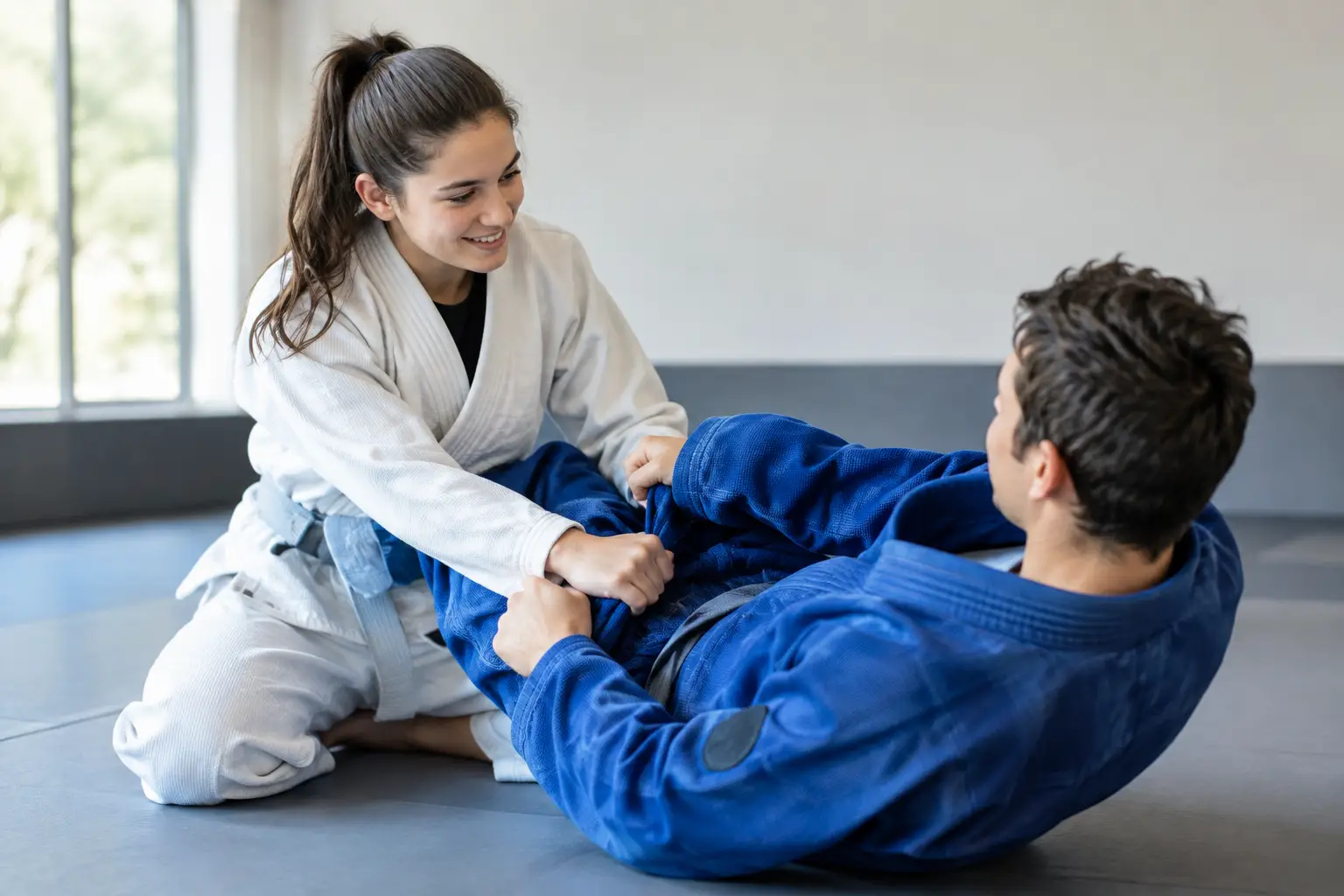
Walking into a martial arts academy for the first time can feel more intimidating than the workout itself. You may wonder whether everyone already knows what they are doing, whether you are fit enough to keep up, or whether you will be thrown into sparring before you understand the basics. So, is Jiu-Jitsu good for beginners? Yes - when it is taught with structure, patience, and a clear path for progress.
Brazilian Jiu-Jitsu gives beginners something many fitness routines do not: a practical skill to improve week after week. You are not simply counting calories or repeating the same machine circuit. You are learning how to stay composed in uncomfortable situations, solve problems under pressure, and build confidence through earned progress.
Why Jiu-Jitsu Works So Well for First-Time Students
Jiu-Jitsu is often called the gentle art, but that description needs context. Training can be demanding, and it will challenge your cardio, mobility, coordination, and focus. The difference is that Brazilian Jiu-Jitsu is designed around leverage, timing, position, and technique rather than relying only on size or strength.
That makes it accessible to adults who have not exercised in years, teenagers looking for a constructive challenge, and children who need a positive outlet for energy. A beginner does not need to arrive strong, flexible, or experienced. Training is where those qualities are built.
For many adults, the appeal is practical. Jiu-Jitsu provides a full-body workout while teaching realistic self-defense awareness. It also gives busy professionals a place to leave the workday behind. Once class begins, there is little room to replay emails or deadlines. You have to be present, attentive, and calm.
For children, the benefits reach beyond physical activity. A well-organized kids program teaches listening, respectful behavior, body control, persistence, and how to respond to challenges without panic. Those are skills that matter at school, at home, and in social situations.
Is Jiu-Jitsu Good for Beginners Who Are Not in Shape?
Absolutely, but beginners should set the right expectation: the first few classes may be tiring. That is normal. Jiu-Jitsu uses muscles and movement patterns that a treadmill or weight room may not fully prepare you for. Even highly athletic people can feel challenged when they first learn to move efficiently on the ground.
The good news is that you do not need to “get in shape first.” Waiting until you feel ready often becomes a reason to delay. A beginner-friendly class lets you develop conditioning at an appropriate pace while learning the technical foundations that make training safer and more enjoyable.
Your early progress may be simple but meaningful. You may learn how to fall correctly, maintain a balanced base, escape from underneath an opponent, or control distance without using brute force. These skills build on one another. Within a few weeks, movements that felt awkward begin to feel familiar.
Consistency matters more than intensity at the start. Two or three classes a week is enough for most new students to develop momentum without overwhelming their schedule or recovery. Someone who trains steadily for six months will usually progress far beyond someone who trains hard for two weeks and burns out.
What a Good Beginner Class Should Feel Like
A quality academy does not measure a beginner’s first day by how exhausted they become. It measures whether they learn, feel respected, and want to return.
A typical class starts with movement and warm-up drills that prepare the body for training. The instructor then teaches a small number of techniques, breaking down the details: where to place your hands, how to position your hips, when to apply pressure, and why a movement works. Students practice with a partner before adding more resistance.
Live training, often called rolling, may be included, but it should be introduced intelligently. New students do not need to prove toughness by battling experienced teammates. They need controlled rounds with partners who understand how to train safely and help them learn. Tapping is not losing. It is a responsible signal that protects training partners and allows both people to continue improving.
The best rooms have a culture of discipline without ego. Advanced students remember what it was like to be new. They train with awareness, give useful feedback, and help make the academy a place where people can work hard without feeling out of place.
The Real Challenge: Being Comfortable as a Beginner
The hardest part of Jiu-Jitsu for many people is not physical. It is accepting that you will not know everything immediately.
Beginners spend time in unfamiliar positions. They may forget a sequence, get caught in a simple submission, or feel clumsy during drills. That is not evidence that Jiu-Jitsu is not for them. It is the learning process in action.
Jiu-Jitsu rewards humility because every class gives immediate feedback. If a position is unstable, you feel it. If you rush, you often lose balance. If you stay patient, protect your posture, and use good mechanics, your results improve. Over time, that feedback develops a powerful kind of confidence: not the confidence of pretending challenges are easy, but the confidence of knowing you can face them and keep working.
This is also why the art can be especially valuable for children. Kids learn that effort, attention, and repetition create progress. They gain the courage to try again after a mistake rather than avoiding difficult situations.
Safety Depends on Coaching and Culture
Like any contact sport, Jiu-Jitsu carries some risk. Students can experience sore muscles, minor bumps, and occasional injuries. The goal is not to pretend risk does not exist. The goal is to train in an environment that actively manages it.
Good coaching emphasizes controlled technique, hygiene, appropriate partner matching, and respect for the tap. Beginners should be encouraged to ask questions, communicate about injuries or limitations, and take breaks when needed. There is no prize for ignoring pain or trying to match someone else’s pace.
If you have a prior injury, are returning to exercise after a long break, or have a medical concern, speak with a healthcare professional and tell your instructor before training. Many movements can be modified, and good coaches can help you build a sustainable routine rather than forcing you into one approach.
Parents should look for the same thoughtful structure in a children’s program. Young students need age-appropriate instruction, close supervision, and classes that balance technical learning with positive behavior standards. A three-year-old needs a very different learning environment than an eleven-year-old.
What Beginners Need Before Their First Class
You do not need expensive gear or a background in combat sports. Wear comfortable athletic clothes without zippers or hard accessories, bring water, and arrive with a willingness to learn. If the academy provides or lends a uniform for a trial class, follow its guidance on what to wear.
Come with one realistic goal. It might be to complete the class, learn one technique, meet the instructor, or simply become familiar with the environment. Small wins remove the pressure to be perfect on day one.
It also helps to remember that experienced students are usually focused on their own training. They are not waiting to judge the new person in the room. In a healthy academy culture, showing up as a beginner is respected because everyone understands the courage it takes to start.
A Beginner’s Path Can Lead Anywhere
Some people begin Jiu-Jitsu for fitness and discover a lifelong passion. Others want practical self-defense, a stress outlet, a stronger routine, or a confidence-building activity for their child. A few eventually choose to compete. None of those goals is more valid than another.
What matters is having coaching that meets you where you are and challenges you to grow. At Winners Jiu-Jitsu Academy, students can begin with a free trial class and follow a guided path that fits their age, experience, and goals. Championship-level standards and beginner support should work together, not compete.
Your first class does not require you to be fearless, athletic, or prepared with every answer. It only asks you to step onto the mat, pay attention, and give yourself permission to begin.