
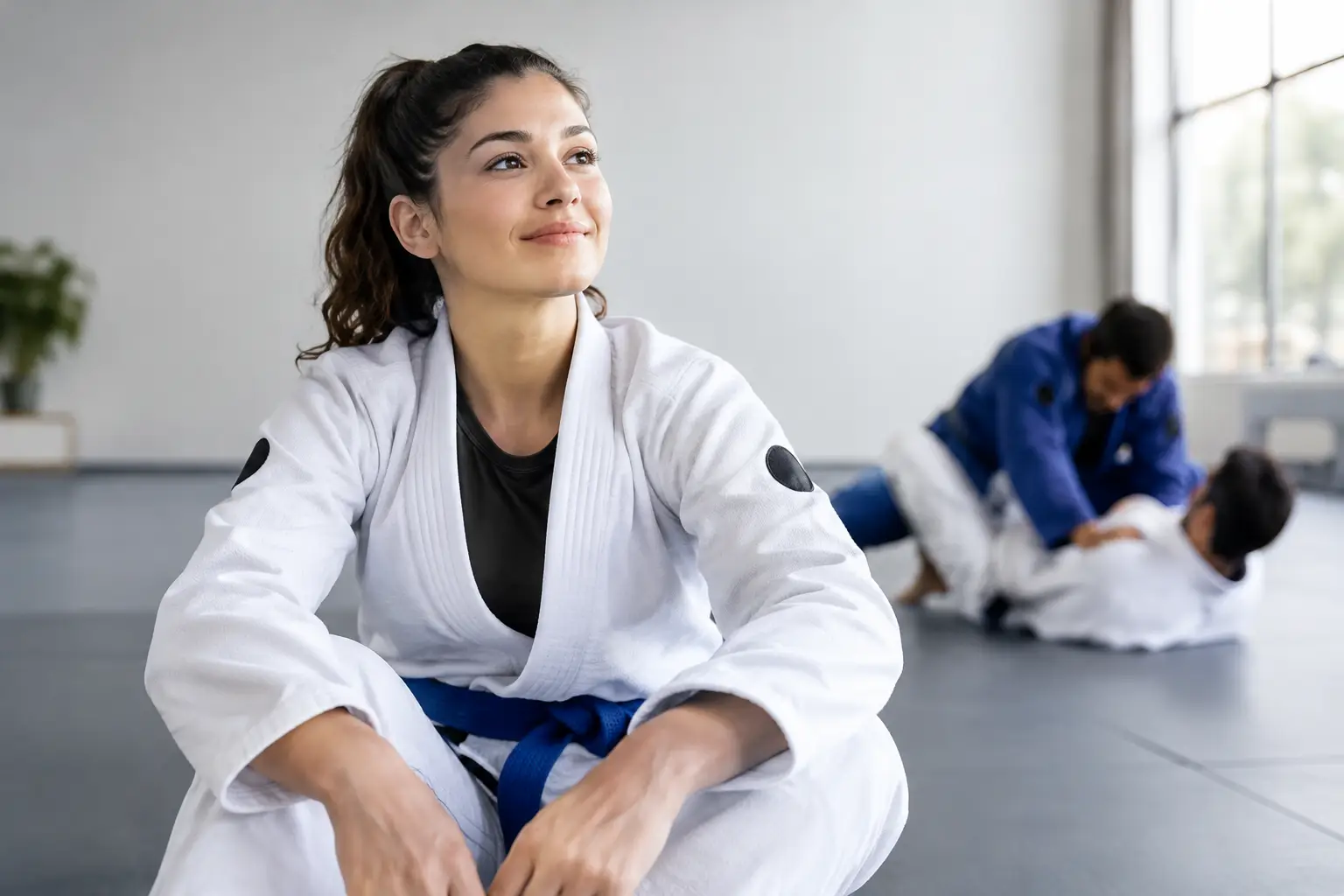
The first time you step onto a Jiu-Jitsu mat, confidence may be the last thing you feel. You may be unsure where to stand, how to move, or whether everyone else already knows more than you. That is exactly why people ask, does BJJ build confidence? Yes - but not through empty encouragement or a belt handed out for showing up. Brazilian Jiu-Jitsu builds confidence by giving students repeated proof that they can stay composed, learn difficult skills, and respond when pressure rises.
For adults, that proof can change the way they carry themselves at work, at home, and in stressful situations. For children, it can become a foundation for speaking up, trying new things, and handling setbacks without falling apart. The confidence is real because it has been practiced.
Does BJJ Build Confidence in a Meaningful Way?
BJJ is different from activities where progress is mostly measured by appearance, speed, or natural athletic ability. It asks students to solve problems with a resisting partner. A smaller person learns how leverage, positioning, timing, and technique can create control. A strong person learns that effort matters, but smart decisions matter too.
At first, training can be humbling. You may struggle to escape a position. You may forget a sequence you understood five minutes earlier. You may tap during sparring, then realize that tapping was not failure. It was a safe, intelligent choice that let you reset, learn, and keep going.
That process creates a durable kind of self-belief. Rather than thinking, “I am confident because I never struggle,” students begin to think, “I can handle struggle, make adjustments, and improve.” That mindset is useful far beyond the academy.
Confidence does not arrive all at once. It grows quietly through dozens of small moments: attending a first class despite nerves, learning how to breakfall safely, escaping a difficult pin, asking a coach for help, or staying calm during a tough round. Eventually, students notice that challenges no longer feel like signals to quit. They feel like problems to work through.
Why Pressure on the Mat Builds Composure Off It
BJJ gives students a controlled environment to experience pressure. Sparring can be physically demanding, but a well-run academy creates clear rules, supervision, and a culture of respect. Students learn to breathe, protect themselves, recognize danger, and make decisions instead of panicking.
That is a major reason the confidence transfers to daily life. A difficult conversation, a presentation at work, a school challenge, or a crowded stressful moment may still feel uncomfortable. But the student has practiced an important response: pause, assess, and act with purpose.
For professionals, training can become a reset from a demanding week. The mat does not care about your job title or the size of your inbox. It rewards attention, consistency, and problem-solving. Many adults find that this focused challenge reduces stress because it gives their minds a constructive place to work.
For children, the lesson is equally valuable. A child who learns to stay calm while a training partner applies controlled pressure is also practicing emotional regulation. They learn that strong feelings do not have to control their choices. With age-appropriate instruction, that can help kids develop patience, resilience, and a healthier response to frustration.
Skill Creates Confidence Better Than Hype
There is a difference between feeling confident and being capable. The strongest form of confidence combines both.
A student who understands distance, balance, basic escapes, and how to create space has practical tools. They are not being told they are powerful. They are learning how to move with awareness and protect themselves when necessary. This matters to adults looking for real-world self-defense knowledge, as well as parents who want their children to have safer, more constructive responses to bullying.
BJJ does not promise that someone will never feel afraid. Fear can be useful when it helps a person recognize risk. Training teaches students not to let fear take over. They learn to use posture, awareness, verbal boundaries, and physical skills responsibly. The goal is always to avoid unnecessary conflict, not seek it out.
This is also why good coaching matters. Reckless sparring and oversized egos do not build healthy confidence. They can make beginners feel unsafe or discouraged. A strong program matches training intensity to experience, size, age, and goals. Beginners need guidance and technical repetition. Competitors need demanding preparation. Kids need structure, encouragement, and clear boundaries. Every student should feel challenged without feeling abandoned.
The Role of Failure in Building BJJ Confidence
No one wins every round in Jiu-Jitsu. Even highly skilled athletes are caught, swept, submitted, and forced to adapt. That may sound discouraging, but it is one of the discipline's greatest strengths.
On the mat, failure is specific. You did not escape because your elbow was out of position. You lost balance because your posture broke. You missed the submission because you rushed the finish. Specific feedback gives students something useful to fix.
Over time, students stop treating mistakes as evidence that they are not good enough. They see them as information. That shift is powerful for a child who is nervous about school or sports, an adult returning to exercise after years away, or a competitor preparing for a demanding tournament.
Belt progression supports that long-term perspective. Earning a new belt feels meaningful because it represents consistent attendance, technical growth, resilience, and character. Still, belts are not the only measure of progress. A white belt who used to avoid sparring but now starts each round with calm focus has made a major gain. A child who once cried after losing but now asks what to practice next is building confidence that will last.
What Parents Should Know About Kids and Confidence
Parents often see the changes before children can explain them. A child may stand taller, make better eye contact, volunteer an answer in class, or recover more quickly after a frustrating day. These changes come from being part of a structured environment where effort is noticed and improvement is earned.
The right kids' Jiu-Jitsu class does not rely on intimidation. Young students need coaches who can hold high standards while making them feel safe and included. They should learn respect for training partners, self-control, listening skills, and the responsibility that comes with martial arts knowledge.
Confidence for kids also depends on consistency. One class can be exciting, but regular training gives them enough repetition to see themselves improve. Programs divided by age and developmental stage help instructors teach skills in ways children can understand, whether they are learning basic movement at age four or beginning structured sparring as an older child.
Parents should expect some ups and downs. A shy child may take time to join group activities. An energetic child may need time to develop focus. Progress is not always linear, and that is normal. The goal is not to turn every child into a competitor. It is to help them become more capable, respectful, and willing to face challenges.
How Adults Can Start Without Feeling Intimidated
Many adults delay their first class because they believe they need to get fit first, be naturally tough, or already know something about martial arts. None of that is required. BJJ is a practice, not a test you must pass before joining.
Start by giving yourself permission to be new. Wear comfortable athletic clothing if the academy provides a uniform for a trial. Arrive a few minutes early, tell the instructor about injuries or concerns, and focus on learning one movement at a time. Most beginners are surprised by how welcoming experienced students can be, because they remember their own first day.
Training two or three times per week is enough for many adults to build momentum. One session can help, especially when life is busy, but regular exposure makes the lessons stick. You will improve conditioning, mobility, and technique gradually. More importantly, you will start recognizing yourself as someone who keeps commitments to personal growth.
At Winners Jiu-Jitsu Academy, students can begin with a free trial class and train within a community built for beginners, families, serious practitioners, and competitors. The standard is high, but every student starts with the same first step: showing up.
Confidence Is Earned One Round at a Time
BJJ confidence is not loud. It does not require proving yourself to strangers or pretending that life is easy. It is the quiet certainty that comes from knowing you can stay present when things get difficult, learn from mistakes, and keep moving forward.
Whether you are a parent seeking a stronger path for your child, an adult looking to rebuild fitness and self-respect, or an athlete chasing the next level, the mat gives you a place to practice courage safely. Take the first class, stay patient with the process, and let your progress speak for itself.