
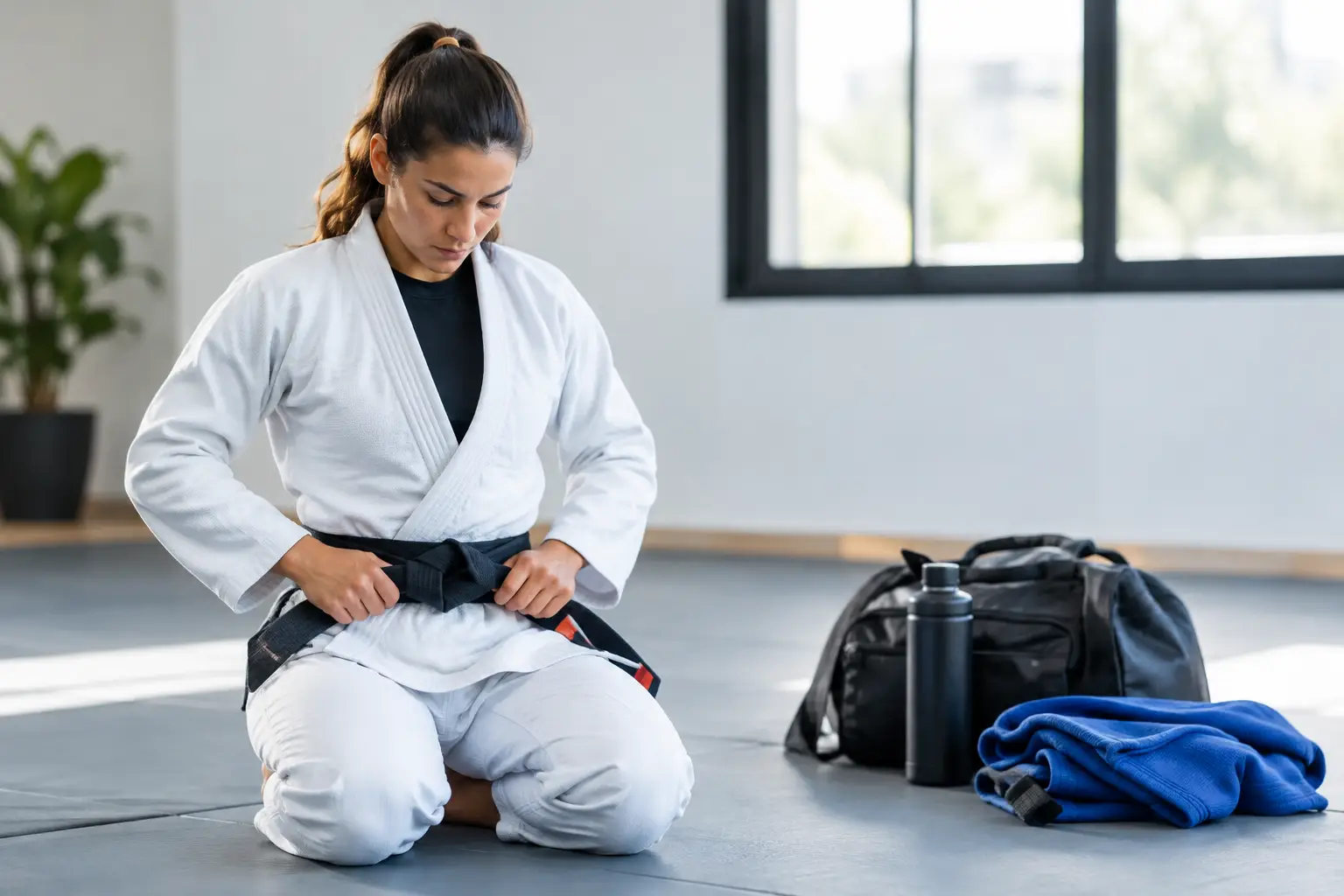
Your first few minutes on the mat can shape the entire class. Arriving rushed, dehydrated, or unsure of what to do can make even a welcoming beginner lesson feel intimidating. Good BJJ class preparation removes that friction. It lets you walk in calm, focused, and ready to learn - whether you are beginning as an adult, bringing your child to class, or preparing for harder competition training.
Brazilian Jiu-Jitsu rewards consistency more than perfection. You do not need to arrive already flexible, tough, or knowledgeable. You do need to show respect for your training partners, your coach, and the process. A few simple habits before class help you do exactly that.
BJJ Class Preparation Begins Before You Leave Home
Start by giving yourself enough time. Plan to arrive 10 to 15 minutes early, especially for a first class. That margin gives you time to check in, change, meet the instructor, and get familiar with the academy without feeling like you are already behind.
For parents, arriving early helps children settle into the environment. A child who has a moment to see the mats, meet the coach, and watch the class begin is often more comfortable than one who is rushed through the door. Young students do best when training becomes part of a predictable routine: pack the bag, arrive calmly, listen to the coach, and give their best effort.
Adults benefit from the same structure. Jiu-Jitsu may be the hour where you leave work pressure behind, but that transition takes intention. Put your phone away, take a breath, and enter class with a learner's mindset. The goal is not to prove anything in one session. The goal is to improve one decision, one position, and one round at a time.
What to Wear for Gi and No-Gi Training
What you wear depends on the class format. For Gi Jiu-Jitsu, you will train in a clean BJJ gi. If you are attending a trial class and do not own one yet, the academy can explain what is available or appropriate to wear. Under the gi, many athletes wear a fitted rash guard or athletic shirt. It is optional in some settings, but it can add comfort and reduce friction.
For No-Gi, wear a clean, fitted rash guard or athletic shirt with grappling shorts or athletic shorts without pockets, zippers, or loose hardware. Leggings or spats are also common under shorts. Avoid loose clothing that can catch fingers or make movement harder to control.
For every format, personal hygiene is part of the uniform. Come to class clean, with trimmed fingernails and toenails. Remove jewelry, watches, and hard accessories before stepping on the mat. Cover any cuts securely, and let the instructor know if you have a skin condition, injury, or illness that could affect safe training.
These details are not about looking polished. They protect everyone in the room. Jiu-Jitsu is close-contact training, and disciplined habits show your teammates that you are a person they can train with confidently.
Pack the essentials
A simple training bag is enough. Bring water, clean training clothes, flip-flops or slides for walking off the mats, and a small towel if you prefer one. If you shower at the academy or head directly to work afterward, pack toiletries and a fresh shirt.
Do not walk barefoot through the restroom, lobby, or parking area and then step onto the mat. Wear your slides whenever you leave the training area. This is one of the easiest ways to help keep the academy clean and protect the health of the whole team.
Eat and Hydrate Without Feeling Heavy
Jiu-Jitsu class can involve drilling, positional training, conditioning, and live sparring. You want enough energy to think and move well, without arriving so full that every scramble feels uncomfortable.
For most people, a balanced meal two to three hours before class works well. Think lean protein, a moderate serving of carbohydrates, and foods you know your body handles easily. If you are training soon after work, a lighter snack 45 to 90 minutes beforehand may be a better choice. A banana with yogurt, toast with nut butter, or a small protein-focused snack can be enough.
The exact approach depends on your schedule, body, and class intensity. Some athletes can train after a full meal; others need more time. Pay attention to how you feel during rolls, then adjust gradually. The important part is avoiding two extremes: arriving underfed and exhausted, or eating a heavy meal immediately before training.
Hydration should begin earlier in the day, especially in South Florida heat. Bring water and take reasonable sips throughout class. Do not wait until you are dizzy or cramping to think about fluids. If you sweat heavily during intense sessions, replenish after class as well.
Prepare Your Body, but Do Not Overdo It
You do not need an intense workout before Jiu-Jitsu. Class warm-ups and movement drills are designed to prepare you for the work ahead. In fact, exhausting yourself before technical training can make it harder to learn safely.
If you have been sitting at a desk all day, a short walk, light mobility work, or a few minutes of gentle stretching can help you arrive less stiff. Focus on areas that commonly feel tight: hips, shoulders, neck, ankles, and upper back. Keep it easy. The purpose is to feel ready, not to force flexibility.
If you have an old injury, be direct about it. Tell your coach before class begins and tell your training partner when needed. A quality academy can help you modify drills, choose safer positions, or control the pace. Training through pain is not the same as training with discipline. Pain that feels sharp, unstable, or unusual deserves attention.
Know What to Expect as a Beginner
Many adults delay their first class because they worry they will not know what to do. The truth is that no one expects a beginner to understand the language, positions, or pace on day one. Your job is to listen, ask questions, and practice with intention.
A typical BJJ class includes a warm-up, technical instruction, partner drilling, and sometimes live training or positional sparring. In the beginning, you may spend more time learning how to move safely, maintain posture, escape a bad position, and communicate with a partner. Those fundamentals are not basic in the dismissive sense. They are the foundation of calm decision-making under pressure.
Tap early when you are caught in a submission or feel unsafe. Tapping is not failure. It is intelligent communication, and it allows both partners to train again tomorrow. As you gain experience, you will learn when to apply pressure, when to relax, and how to stay composed in difficult positions.
Prepare mentally for discomfort, not danger
Jiu-Jitsu puts you in unfamiliar situations. You may feel tired, pinned, confused, or frustrated during your first few classes. That is normal. The art teaches you to solve problems while staying calm, a skill that carries far beyond the mat.
Do not measure your progress by whether you “win” a round. Early progress may look like remembering a technique, breathing more steadily, escaping once instead of zero times, or returning for your next class despite feeling challenged. These are real victories.
How Parents Can Prepare Kids for Class
For children, preparation should feel encouraging rather than intense. Make sure they have clean training clothes, water, and a small pre-class snack if needed. Arrive early enough that they do not feel rushed, and avoid giving them a long list of performance instructions in the car.
Instead, set one simple goal: listen to the coach, be a good teammate, or try one new thing. After class, ask what they enjoyed or what they learned rather than asking whether they won. This helps children connect Jiu-Jitsu with confidence, discipline, and growth instead of pressure.
At Winners Jiu-Jitsu Academy, students are guided according to their age, experience, and goals. That structure matters because a 4-year-old building coordination, a working professional managing stress, and a competitor preparing for a tournament all need different things from the mat. What they share is the opportunity to build character through consistent practice.
Build a Routine You Can Keep
The best BJJ class preparation is the routine you can repeat. Lay out your clothes before work. Keep a packed training bag by the door. Plan a reliable snack. Put class on the calendar as a commitment to your health and personal development.
Some weeks, training twice may be realistic. Other weeks, family, work, travel, or recovery may limit you to one class. Consistency does not mean never missing a session. It means returning without making excuses when life gets busy.
Come prepared, train with humility, and leave with one lesson you can carry into the next challenge. Every class is a chance to build the kind of confidence that stays with you long after you step off the mat.