
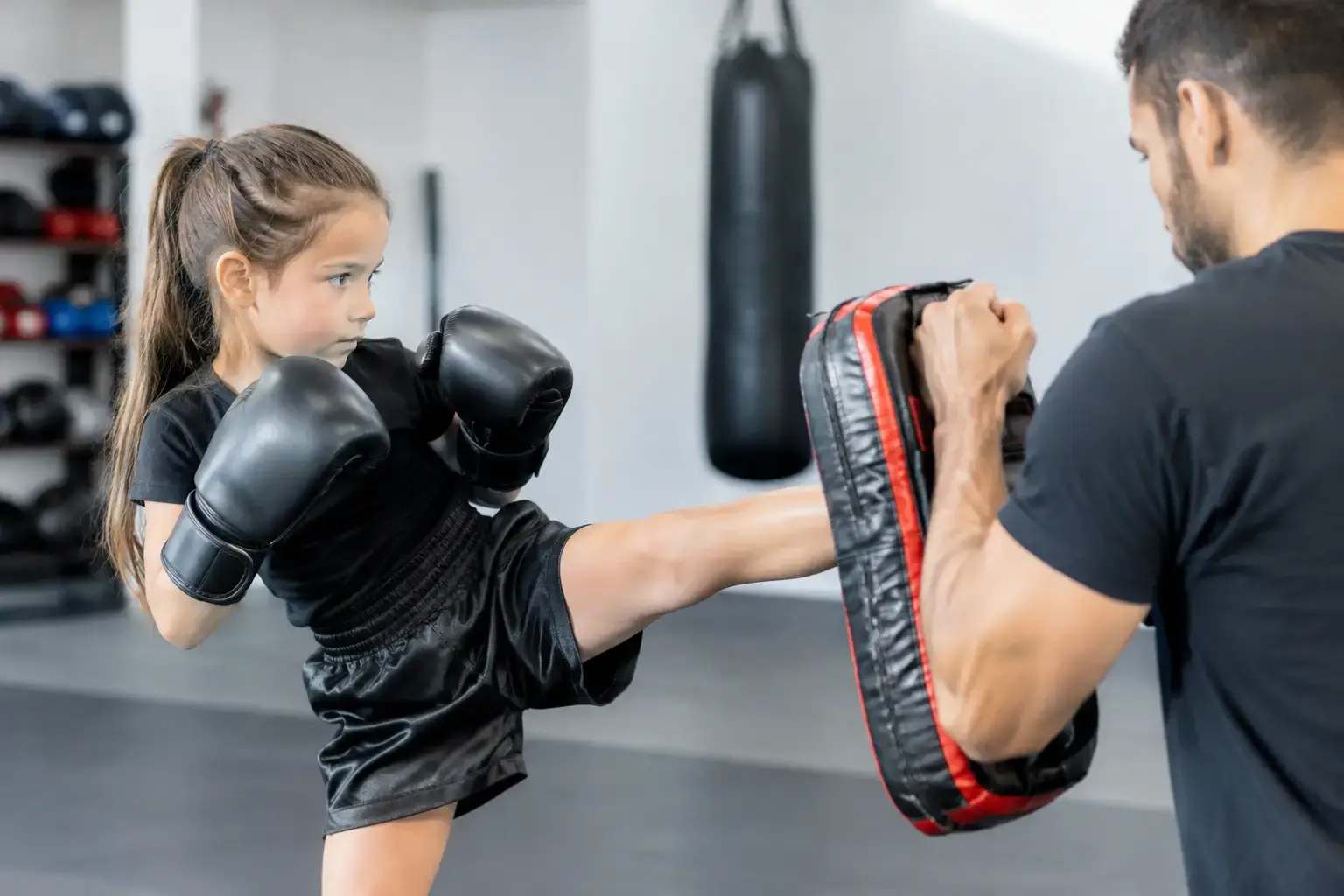
A child does not need to be the fastest, toughest, or most coordinated kid in the room to begin martial arts. Parents asking when should kids start kickboxing are usually asking something more meaningful: Will my child be safe, supported, and able to keep up? With a well-designed youth program, many children can begin learning age-appropriate kickboxing foundations as early as 3 or 4, while more structured technique training often becomes a better fit around ages 5 to 7.
The right starting point is less about a single birthday and more about readiness. A quality program meets children where they are, then helps them develop focus, body control, confidence, and discipline one class at a time.
When Should Kids Start Kickboxing?
For most children, ages 3 to 4 are appropriate for introductory martial arts classes built around movement, listening, balance, and simple coordination. At this stage, “kickboxing” should not look like an adult fight class. It should feel organized, energetic, and encouraging, with coaches using games and drills to teach stance, movement, basic punches and kicks in the air or on pads, and respectful behavior.
From ages 5 to 7, many children are ready for more structured kickboxing instruction. They can usually follow multi-step directions, work with partners under close supervision, and begin understanding why technique matters. They may practice combinations on pads, learn defensive positioning, and develop the habit of staying calm when a drill feels challenging.
By ages 8 to 12, students can often build more technical skill, conditioning, and controlled partner drills. They are also better able to understand responsibility: protecting their training partner, listening carefully, and using martial arts skills with judgment rather than aggression.
These are useful ranges, not rigid rules. One focused 4-year-old may thrive in a beginner class, while a 7-year-old may need a little more time to become comfortable in a group setting. The best first step is a class evaluation, not a guess based on age alone.
Readiness Matters More Than Athletic Ability
Parents sometimes wait because their child seems shy, uncoordinated, or easily distracted. Those qualities do not disqualify a child from kickboxing. In many cases, they are exactly why a structured martial arts class can help.
A child may be ready to start when they can participate in a class for a short period, respond to basic coaching cues, and practice safely around other children. They do not need perfect attention. They need a willingness to try, and coaches need the ability to redirect them positively.
Look for small signs of readiness: your child enjoys active play, wants to learn a new skill, can take turns, or responds well to routines. Even nervous children often gain confidence once they realize that no one expects them to know everything on day one.
If your child has difficulty with transitions, sensory sensitivities, or anxiety in new environments, speak with the instructor before class. An experienced youth coach can suggest the right age group, explain what the first session will involve, and help create a smoother introduction.
What Safe Kids Kickboxing Should Look Like
Kickboxing can be an outstanding outlet for energy and a powerful confidence builder, but the quality of instruction matters. Children should never be treated like miniature adults. Their classes need clear structure, patient coaching, and safety standards designed for their developmental stage.
For younger students, training should emphasize movement skills, pad work, distance awareness, and control. They can learn how to punch and kick with proper form without being encouraged to hit other children. A responsible program teaches that martial arts are for discipline and self-defense, never for starting fights or showing off.
As students mature, coaches can gradually introduce carefully controlled partner drills. Contact should always be age-appropriate, supervised, and purposeful. Hard sparring, especially head contact, is not a requirement for a child to gain fitness, coordination, self-defense awareness, or confidence.
A strong kids program also teaches the habits around the techniques: lining up, listening, keeping hands to themselves, respecting teammates, and recovering after mistakes. Those lessons carry into school, sports, and family life.
The difference between training and fighting
Some parents hear “kickboxing” and picture a competitive ring. Youth kickboxing does not need to begin there. Early training is about learning how the body moves, how to maintain balance, and how to stay composed under instruction.
Competition may be an exciting goal for some older, experienced students, but it should never be the entry requirement. The right academy gives every child a path, whether they want healthier habits, stronger self-confidence, self-defense skills, or a future in competitive martial arts.
Benefits That Reach Beyond the Mat
The physical benefits are easy to see. Kids kickboxing develops coordination, balance, flexibility, cardiovascular endurance, and general athleticism. For children who do not connect with team sports, it can provide a clear individual progress path while still building friendships and teamwork.
The deeper benefits often matter most to parents. A child learns to show up consistently, accept coaching, and keep trying after a missed combination or difficult drill. Over time, that process builds resilience. Rather than avoiding challenges, students learn to breathe, reset, and try again.
Kickboxing can also help children develop healthier confidence. Real confidence is not loudness or aggression. It is the quiet belief that comes from practicing a skill, making progress, and knowing how to handle pressure with control.
For families concerned about bullying, martial arts training can be especially valuable when it includes boundaries, awareness, verbal confidence, and de-escalation. A child who stands tall, communicates clearly, and understands personal space is often better equipped to avoid conflict. Physical techniques are only one part of the lesson.
Choosing the Right Class for Your Child
A child may be ready for kickboxing, but still need the right environment to enjoy it. Visit the academy and pay attention to how instructors speak to students. Firm standards are valuable, yet children should be corrected with respect. The room should feel focused, clean, and welcoming rather than chaotic or intimidating.
Ask how classes are grouped. Separating younger children from older students allows coaches to match drills, attention spans, and physical expectations to each age range. Programs for ages 3 to 4 should look different from classes for ages 8 to 12, even when both are teaching core martial arts values.
It is also reasonable to ask about instructor experience, class size, safety policies, and sparring expectations. A clear answer is a good sign. Parents should understand how progress is measured and what their child will actually be doing in class.
At Winners Jiu-Jitsu Academy, kids kickboxing is part of a guided youth development path that values technical instruction, disciplined habits, and confidence under pressure. The goal is not simply to teach a child to throw a punch or kick. It is to help them become more focused, capable, and respectful in every area of life.
How Often Should a Beginner Train?
For most beginners, two classes per week is a strong starting rhythm. It gives children enough repetition to remember what they learn without making martial arts feel like another source of pressure. Consistency matters more than an intense schedule during the first few months.
A highly motivated child may eventually want to train more often, particularly if they enjoy the social side, want to improve quickly, or set competitive goals. Still, parents should protect time for school, rest, family, and other interests. Martial arts is most effective when it becomes a sustainable habit rather than a short burst of enthusiasm.
Do not judge the first few classes too quickly. Some children run onto the mat immediately; others watch quietly, need reassurance, or take several sessions to settle into the routine. Progress is not always dramatic at first. Sometimes it looks like a child making eye contact with the coach, joining warm-ups without hesitation, or proudly remembering one new combination.
A Strong Start Builds More Than Skill
There is no prize for starting at the youngest possible age, and there is no “too late” label for a child who begins later. What matters is finding a program that challenges your child without overwhelming them, teaches control before intensity, and makes effort feel worthwhile.
Give your child the chance to step onto the mat, learn at their own pace, and discover what disciplined practice can do. The first class may begin with a simple stance and a few careful movements, but the confidence built through showing up can grow far beyond the gym.