
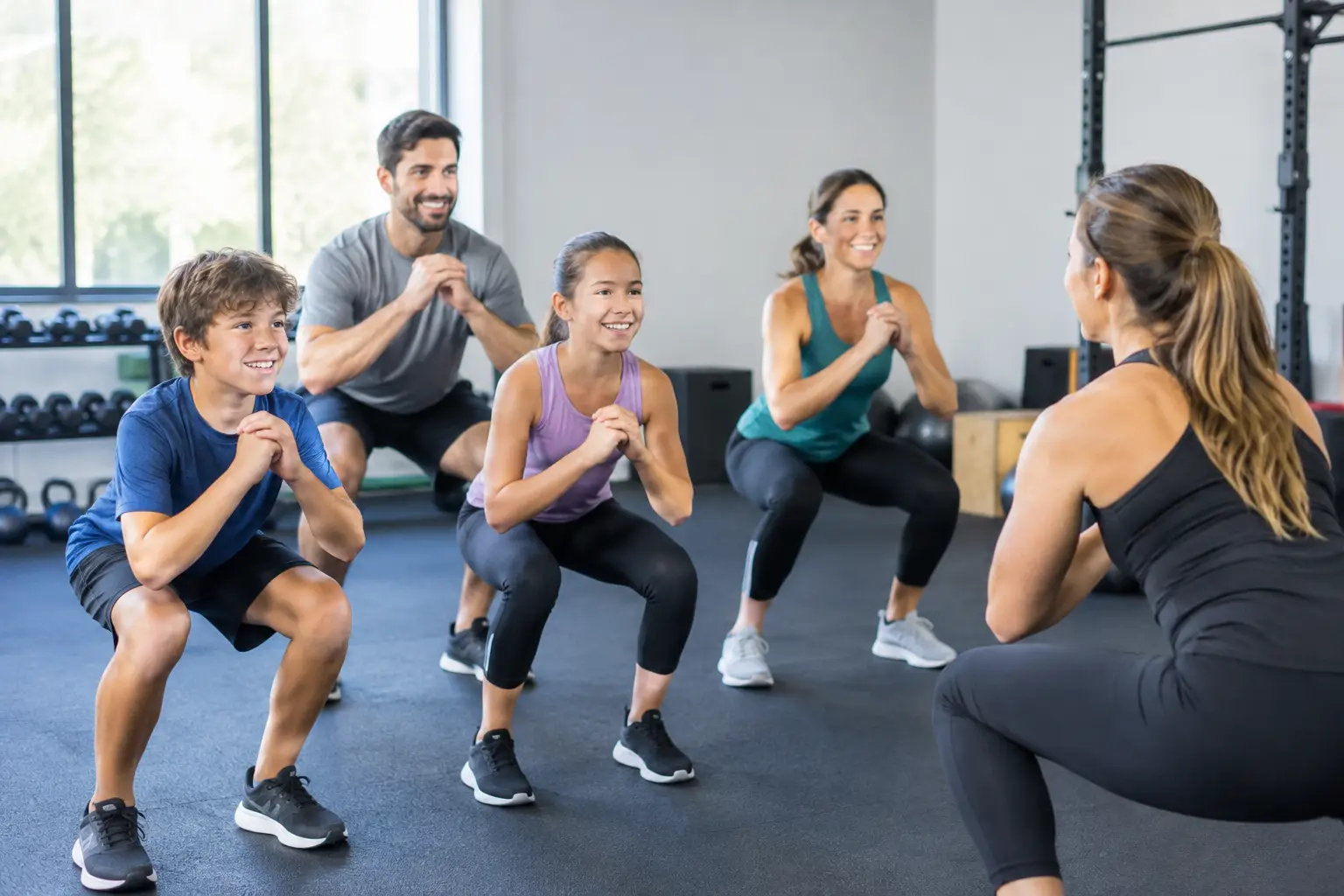
A family wants an activity that builds confidence without feeling like another obligation. A team wants a memorable challenge that does more than provide a quick workout. Private group training meets both needs by bringing people who already share a connection onto the mat for focused instruction, practical progress, and a challenge they can face together.
Unlike a standard class, a private session is shaped around your group. That could mean a parent and child learning foundational Brazilian Jiu-Jitsu, friends preparing for a fitness goal, coworkers looking for a purposeful team experience, or athletes who want extra technical rounds with training partners they trust. The value is not simply privacy. It is the attention, pace, and shared accountability that come from having a coach teach directly to your group’s goals.
What Private Group Training Can Do
Brazilian Jiu-Jitsu is often described as an individual sport, but progress rarely happens alone. Training with people you know can make the first step easier, especially for adults who feel nervous about beginning martial arts or parents who want to better understand what their child is learning.
In a private group setting, the coach can spend less time managing a large room and more time correcting details. Your group may work on posture, balance, safe falling, distance management, escapes, takedown entries, or position-specific Jiu-Jitsu. Each lesson can be scaled to the experience in the room, whether everyone is brand-new or the group includes a mix of beginners and experienced students.
That flexibility matters. A session for three coworkers who want conditioning and stress relief should not look exactly like a session for a family that wants self-defense awareness. Likewise, competitive athletes may need technical drilling, situational sparring, and feedback that supports their next tournament. The best training plan starts with a clear purpose, then builds the right level of intensity around it.
The benefits reach past the mat. Groups learn how to stay composed when a movement does not work immediately, communicate clearly, and keep showing up through difficulty. Those are martial arts lessons, but they are also life skills. Kids practice patience and self-control. Adults develop confidence under pressure. Teammates see one another respond to challenge with discipline rather than excuses.
Who Benefits Most From Private Group Training?
Private group training works particularly well for people who want a more personal introduction to martial arts. A first class can feel less intimidating when a friend, sibling, spouse, or colleague is beside you. Everyone begins with the same expectation: learn, move, ask questions, and improve without needing to prove anything.
Families often find that shared training becomes quality time with a purpose. Parents can model consistency, courage, and respect while children see that learning is not only for school. For families with children of different ages, separate instruction may still be necessary for safety and developmental needs. A 4-year-old and a 12-year-old do not learn, process, or spar in the same way. However, a private group experience can still create a common family connection through age-appropriate drills and goals.
Friends benefit from the built-in accountability. It is easier to keep a commitment when someone is expecting you, and training partners can celebrate progress that might otherwise go unnoticed. One person may finally perform a clean escape. Another may complete a challenging conditioning round without stopping. Shared wins make the work more enjoyable.
For professional teams, martial arts training offers a different kind of team-building experience. It asks people to pay attention, solve problems, manage discomfort, and encourage one another in real time. The goal is never to create a hostile environment or force people beyond their limits. A well-run session is structured, safe, and welcoming to every fitness level. It can still be demanding, because meaningful confidence is earned through effort.
Experienced practitioners can also use private training to sharpen specific areas. A small group preparing for competition might focus on guard passing, escapes from dominant positions, match strategy, or conditioning for the pace of tournament rounds. With elite guidance, details that are easy to miss in a busy class become clearer: hand placement, hip angle, timing, grips, and the decisions that connect one technique to the next.
A Better Session Starts With Clear Goals
The strongest private sessions are not random collections of techniques. Before training begins, the coach should understand who is attending, what experience they have, any physical limitations, and what the group hopes to gain. This protects beginners from being rushed and prevents advanced students from spending the entire session below their level.
A group focused on self-defense may spend more time on awareness, creating distance, breaking grips, getting up safely, and responding calmly when someone is larger or stronger. A fitness-oriented group may use technique-based drills to elevate the heart rate while still learning useful movement. A group of parents and children may focus on confidence, listening skills, balance, and controlled partner work.
There is a trade-off to consider. Private instruction provides more personalization, but it does not replace the variety and community of regular group classes for most students. Class training exposes students to different body types, styles, and training partners. It also supports long-term belt progression and the habit of consistent practice. Private group sessions work best as a focused starting point, a supplement to regular training, or a special experience built around a shared goal.
Frequency depends on that goal. One session can be a powerful introduction or team event. A weekly session can create real technical continuity. Groups preparing for a tournament, school milestone, or fitness target may benefit from a short block of sessions with a clear progression. What matters most is consistency between sessions. Learning improves when people review key movements, stay active, and return ready to build on the previous lesson.
Safety Is Part of High-Level Instruction
A serious martial arts academy does not confuse intensity with carelessness. Jiu-Jitsu training should be challenging, but it should also be controlled. Coaches set expectations for tapping, partner respect, hygiene, movement, and appropriate contact. Beginners need permission to slow down, ask questions, and learn the mechanics before adding resistance.
For parents, this structure is especially reassuring. Children gain the benefits of martial arts when they are guided through a program designed for their age, attention span, and physical development. They do not need to be naturally aggressive or athletic to begin. They need consistent coaching, constructive standards, and a place where effort is recognized.
At Winners Jiu-Jitsu Academy, private groups can train with the same performance-driven standards that have helped develop more than 2,000 students since 2012. The expectation is not that every participant becomes a competitor. The expectation is that each person leaves stronger, more capable, and more confident than when they arrived.
How to Get More From Your Group Session
Come with a purpose, but stay open to coaching. Comfortable athletic clothing, water, and a willingness to learn are enough for most first-time participants. You do not need prior martial arts experience, special flexibility, or a certain fitness level to begin. Let the coach know about injuries or concerns before the session so instruction can be adapted responsibly.
It also helps to agree on the tone of the experience before arriving. If the group is there to learn self-defense, do not treat it as a competition to see who is toughest. If the group includes beginners, experienced members should lead by example through patience and control. The best sessions create a culture where everyone can work hard without feeling embarrassed by where they start.
Progress will look different for every person. One participant may gain technical confidence quickly, while another may first notice better balance, reduced stress, or the courage to engage with a new challenge. Both are meaningful wins. Martial arts rewards people who remain present, accept correction, and return with intention.
A private group session can be the beginning of a stronger family routine, a more connected team, or a long-term martial arts path. Start with people you trust, train with purpose, and let the discipline built on the mat carry into the challenges waiting off it.