
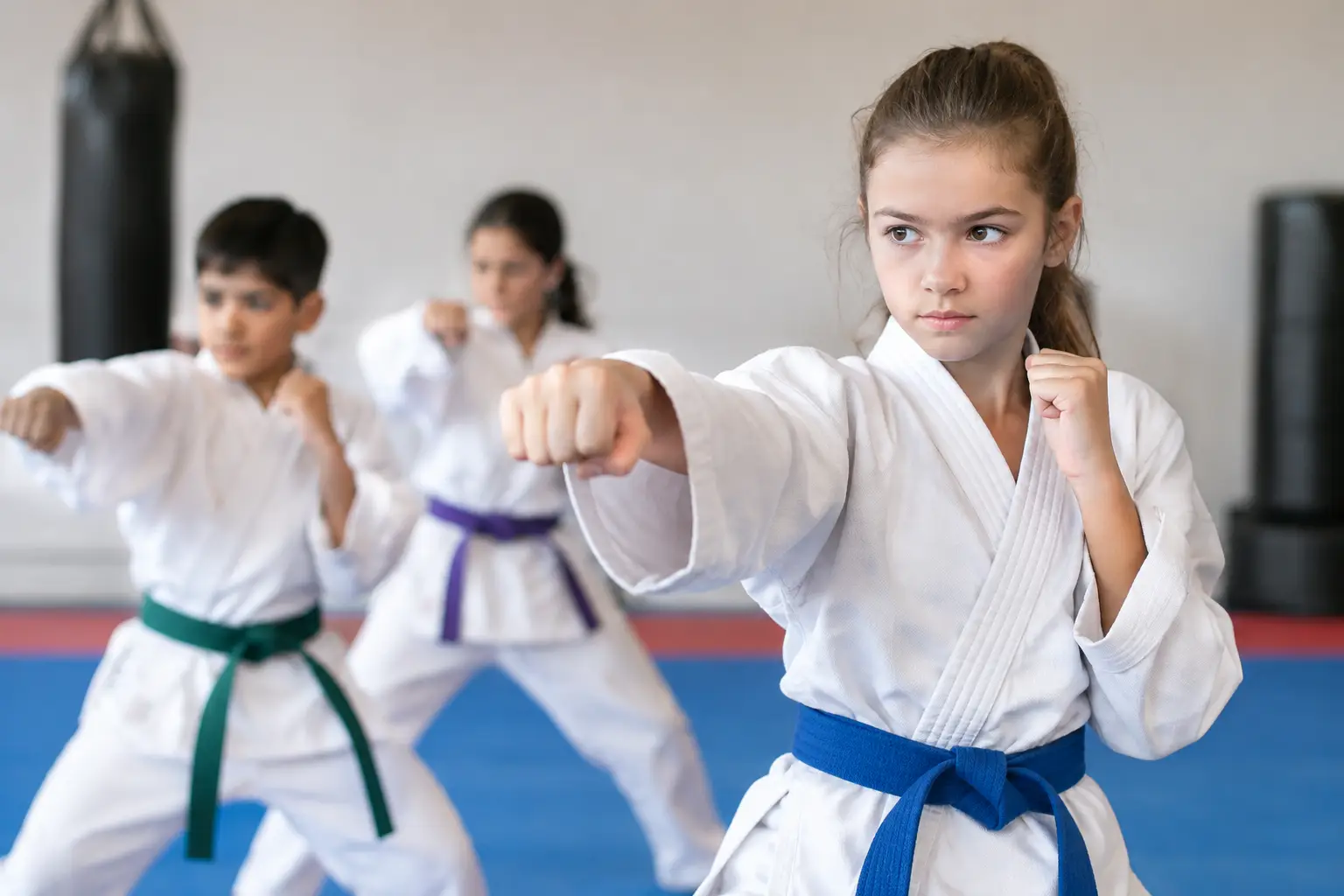
A child who is being bullied does not need to become aggressive. They need to feel steady enough to make good decisions when emotions are high. That is where martial arts anti bullying skills can make a meaningful difference. The right training teaches children how to carry themselves with confidence, use their voice, create space, and seek help - while understanding that fighting is never the first answer.
For parents, the goal is not to raise a child who looks for conflict. It is to give them the posture, judgment, and self-respect to handle difficult moments without feeling helpless. At a quality martial arts academy, those lessons are practiced week after week, in a structured environment where discipline and safety come first.
What Anti-Bullying Training Should Really Teach
Bullying is not one simple problem. It can be repeated teasing, social exclusion, threats, intimidation, unwanted physical contact, or harassment online that spills into school life. Every situation has different risks, which means a child needs more than a few memorized self-defense moves.
Effective training begins with awareness. Children learn to notice escalating behavior, identify when a joke has crossed a line, and recognize that they are allowed to set a boundary. They also learn that walking away is not weakness. When walking away is safe, it is often the strongest and smartest choice.
Martial arts adds something especially valuable: composure under pressure. During drills, students must listen, control their bodies, respect partners, and keep trying when a technique does not work immediately. Those habits transfer beyond the mat. A child who has practiced staying calm while a larger training partner applies controlled pressure is often better prepared to avoid panic in an uncomfortable real-world moment.
Martial Arts Anti Bullying Skills Begin Before Contact
The most useful skills usually happen before anyone throws a punch or grabs a shirt. A confident stance, calm eye contact, and a clear voice can change how a child is perceived. Bullies often look for a reaction, isolation, or an easy target. A child who appears alert and self-assured may be less appealing to target.
This does not mean confidence makes bullying disappear. No child is responsible for another person’s harmful behavior, and parents should never be told that their child simply needs to be tougher. But confidence can help a student respond with greater control instead of fear.
A child should practice short, direct phrases such as “Stop,” “Don’t touch me,” or “I’m leaving now.” The words need to be firm, not insulting or provocative. Instructors can help students rehearse these responses so they do not freeze when a difficult moment happens at school, on a playground, or in an after-school activity.
Equally important, children should know when to get an adult. Reporting repeated bullying is not tattling. It is a responsible step when someone is being threatened, hurt, humiliated, or prevented from safely leaving a situation. The strongest response may be telling a teacher, counselor, coach, or parent right away.
Why Brazilian Jiu-Jitsu Fits the Conversation
Brazilian Jiu-Jitsu is especially useful for anti-bullying education because it is built around control, leverage, balance, and problem-solving rather than trading strikes. A smaller student can learn how to improve position, protect themselves if they fall, and create an opportunity to stand up and move away.
In a well-run kids’ Jiu-Jitsu class, children learn to train with control. They practice safely with partners, follow rules, tap when necessary, and stop immediately when an instructor gives direction. That culture matters. Technical ability without discipline can create problems. Technical ability paired with respect teaches responsibility.
For a child, the value of Jiu-Jitsu is not winning a schoolyard confrontation. It is knowing they have options. They can use posture and verbal boundaries. They can leave and find help. If physical contact cannot be avoided, they can focus on protecting themselves, reducing harm, and disengaging as soon as it is safe.
Kickboxing and other striking arts can also build confidence, coordination, fitness, and discipline. Still, responsible anti-bullying instruction must make the distinction clear: training techniques are practiced in class under supervision, while outside the academy, physical force is a last resort used only for immediate safety.
The Difference Between Self-Defense and Fighting
This distinction is one parents should hear consistently. Fighting is about proving something, getting even, or continuing after the danger has passed. Self-defense is about protecting yourself or another person from immediate harm and stopping when you can safely get away.
Children need direct guidance because emotions can move fast. If someone insults them, self-defense is not the appropriate response. If someone shoves them but they can step back and get an adult, that is usually the better choice. If a child is trapped, being repeatedly hit, or physically prevented from leaving, the priority becomes creating safety and escaping to a trusted adult.
Parents can reinforce this at home with a simple family rule: use words first, leave when possible, get help early, and use physical skills only to protect yourself when there is no safer option. Repeating the rule matters. Children are more likely to remember a plan they have heard and practiced calmly than one delivered only after a frightening incident.
Confidence Has to Be Built, Not Announced
Telling a child to “be confident” rarely changes how they feel. Confidence grows through evidence. Each time a student learns a new movement, partners respectfully with someone new, gets back up after a tough round, or speaks clearly in front of the group, they collect proof that they can handle challenge.
That proof can be powerful for a child who has felt singled out. Martial arts gives them measurable progress: better balance, improved coordination, stronger listening habits, belt advancement, and the satisfaction of earning skills through consistent effort. The transformation is not instant, and it does not require a child to be naturally athletic. It requires patient coaching and regular attendance.
For younger children, classes should be age-appropriate and highly structured. Ages 3 to 4 benefit from movement, listening, personal space, and simple routines. Children ages 5 to 7 can begin practicing stronger boundaries, teamwork, and controlled partner drills. Ages 8 to 12 are often ready for more detailed conversations about peer pressure, physical contact, online behavior, and how to ask adults for help.
What Parents Should Look for in a Program
Not every martial arts program approaches anti-bullying education the same way. Look for instructors who consistently teach respect, emotional control, and safety - not bravado. Children should never be encouraged to use martial arts to intimidate classmates or settle arguments.
A strong program also separates competitive training from self-defense instruction. Competition can build resilience and focus, but a tournament rule set is not the same as a school safety plan. Young students need both technical development and clear judgment about when not to engage.
Ask how instructors handle rough behavior in class. Observe whether students bow or greet one another respectfully, listen when corrections are given, and train with appropriate control. The academy environment becomes a model for how children can treat others outside the gym.
At Winners Jiu-Jitsu Academy, students are guided to build championship-level discipline alongside real-world confidence. Whether a child is shy, energetic, experienced, or stepping onto the mat for the first time, the standard remains the same: train hard, respect others, and use your strength with responsibility.
When Martial Arts Is Only One Part of the Plan
Martial arts can be a valuable part of a child’s support system, but it should not be the only response to ongoing bullying. Parents should document repeated incidents, communicate clearly with school staff, and follow up on the school’s safety plan. If a child shows changes in sleep, mood, appetite, attendance, or willingness to participate in activities they once enjoyed, additional support from a counselor or pediatric professional may be appropriate.
The best outcomes happen when parents, teachers, coaches, and children work together. A child should know exactly who they can talk to, where they can go if they feel unsafe, and what words they can use to ask for help.
A martial arts class cannot control every hallway, group chat, or playground. What it can do is give a child a place to stand taller, practice calm decisions, and discover that real strength includes the courage to walk away, speak up, and ask for support.