
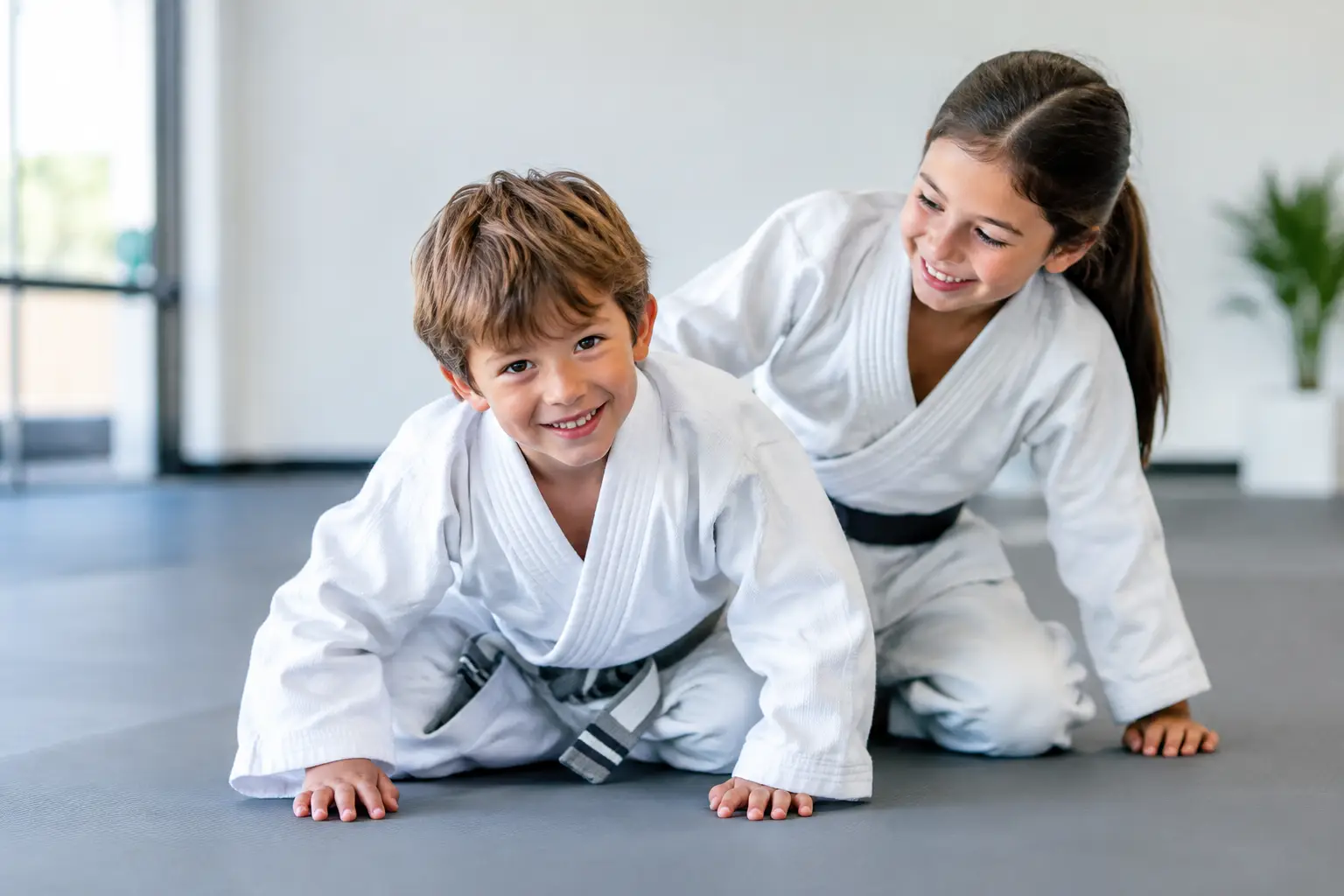
A child who hesitates to join a group activity can look very different after a few months on the mat. They learn how to introduce themselves, listen when instructions matter, try again after a tough round, and stay calm when something does not go their way. That is why parents seek kids Jiu-Jitsu classes Sunny Isles families can trust: they want more than an after-school activity. They want a place where their child can grow stronger in character as well as body.
Brazilian Jiu-Jitsu gives children a challenging, structured way to build confidence without asking them to be the loudest, fastest, or most naturally athletic kid in the room. Progress comes through repetition, focus, and the willingness to keep learning. For children growing up in a busy, high-pressure world, those habits carry far beyond the academy.
What Children Learn Beyond the Techniques
Jiu-Jitsu is a grappling-based martial art that teaches children how to control distance, escape difficult positions, and use leverage rather than wild force. The physical skills are valuable, particularly because they give kids practical tools for personal safety. Yet the deeper value is what happens while they learn them.
A child cannot rush a technique and expect it to work. They must pay attention to details, control their energy, and respect their training partner. In a well-run class, students learn that strength is not the same as aggression. Real confidence comes from knowing they can handle a challenge with composure.
That difference matters for children who are shy, easily frustrated, highly energetic, or still learning how to navigate social situations. Jiu-Jitsu gives them a constructive outlet while setting clear expectations. They practice taking turns, following directions, speaking respectfully, and recovering after mistakes. Every class offers small opportunities to build resilience.
Why Age-Specific Kids Jiu-Jitsu Classes in Sunny Isles Matter
Children should not be taught as smaller versions of adults. Their attention span, coordination, emotional development, and motivations change dramatically between preschool and middle school. Age-appropriate instruction keeps training safe, engaging, and productive.
Ages 3-4: Learning Through Movement and Structure
For younger children, the priority is not memorizing a long sequence of techniques. It is learning how to participate in a class environment. They practice balance, coordination, listening, body awareness, and simple movements through games and carefully guided drills.
At this age, a positive experience is everything. Coaches should use clear directions, frequent encouragement, and activities that help children feel successful. A child may begin by learning how to line up, wait for a turn, or complete a basic movement with a partner. Those wins create the foundation for future discipline.
Ages 5-7: Confidence Takes Shape
Children in this range can begin learning more defined Jiu-Jitsu positions and escapes. They also become more aware of fairness, teamwork, and effort. Classes should balance technical instruction with movement and supervised partner work, giving kids enough challenge to feel proud without overwhelming them.
This is often when parents notice meaningful changes at home. A child may become more comfortable speaking up, more willing to finish difficult tasks, or better able to accept correction. Results vary from child to child, but consistent training gives them a reliable place to practice these skills every week.
Ages 8-12: Skill, Accountability, and Calm Under Pressure
Older children are ready for a more technical approach. They can learn how positions connect, why leverage works, and how to make smart choices during controlled sparring. Training becomes a powerful lesson in problem-solving because every round presents a new challenge to solve.
This age group also benefits from the accountability of goal-setting and belt progression. Earning progress requires attendance, effort, technical growth, and respectful behavior. Children learn that improvement is earned over time, not handed to them after one good day.
A Safe Approach to Self-Defense and Sparring
Parents often ask whether Jiu-Jitsu is safe. Like any physical activity, it requires attentive coaching, suitable pairings, and rules that match a child’s age and experience. Quality instruction does not mean children are thrown into intense sparring on day one.
Beginners first learn how to move safely, fall correctly, communicate with partners, and respect the tap. Drilling is controlled. Coaches supervise closely and adjust activities when a student is smaller, newer, or less confident. The objective is development, not proving who is toughest.
Jiu-Jitsu can also support an effective anti-bullying mindset. Children learn to set boundaries, use their voice, create space, and seek help from trusted adults. Physical techniques are a last resort, not a license to fight. The strongest lesson is that a calm, prepared child is less likely to panic or escalate a conflict.
What a First Class Should Feel Like
The first day can bring nerves for both parent and child. Some kids walk in ready to lead the warm-up; others stay close to a parent and watch from the edge of the mat. Both reactions are normal.
A welcoming academy gives new students time to settle in. They should be introduced to the coach, shown where to stand, and paired thoughtfully during drills. A beginner does not need prior martial arts experience, perfect coordination, or a certain fitness level. They need a coach who can meet them where they are and show them the next step.
Parents should also expect a clean, professional environment and instructors who communicate clearly about safety, class expectations, and progression. Championship credentials matter because they reflect high-level technical knowledge, but coaching children also requires patience, organization, and genuine care. The best programs combine both.
At Winners Jiu-Jitsu Academy, children train within structured age groups and receive guidance shaped by elite competitive experience and a family-centered culture. The goal is not simply to produce better athletes. It is to help each student develop the discipline and self-belief to reach new heights in life.
How Often Should a Child Train?
For most beginners, two classes per week is an excellent starting point. It creates consistency without turning martial arts into another source of pressure. A child has enough repetition to remember what they learned, build friendships, and begin seeing progress.
One class a week can work for a child with a packed schedule or one who needs time to adjust. Progress may be slower, but a positive relationship with training is more valuable than forcing too much too soon. Three or more weekly classes may suit children who are highly motivated, preparing for competition, or eager for a bigger physical challenge.
The right schedule depends on the child’s energy, school workload, other activities, and enthusiasm. Watch how they feel after class. Healthy training should leave them proud and challenged, not chronically anxious or exhausted.
Choosing the Right Program for Your Family
Not every martial arts school offers the same experience. Before enrolling, look beyond a single impressive class or a flashy promise. Ask how children are grouped, how beginners are introduced, and how instructors handle safety and behavior. Observe whether coaches know students by name and whether older or more experienced children model respect.
Consider the culture as carefully as the curriculum. A serious academy can still be warm. High standards can coexist with encouragement. Your child should feel challenged to improve while knowing that mistakes are part of the process.
The right kids Jiu-Jitsu classes in Sunny Isles give children something rare: a place where effort is noticed, courage is practiced, and progress is earned one class at a time. Give your child the chance to step onto the mat, face a manageable challenge, and discover what they can do.