
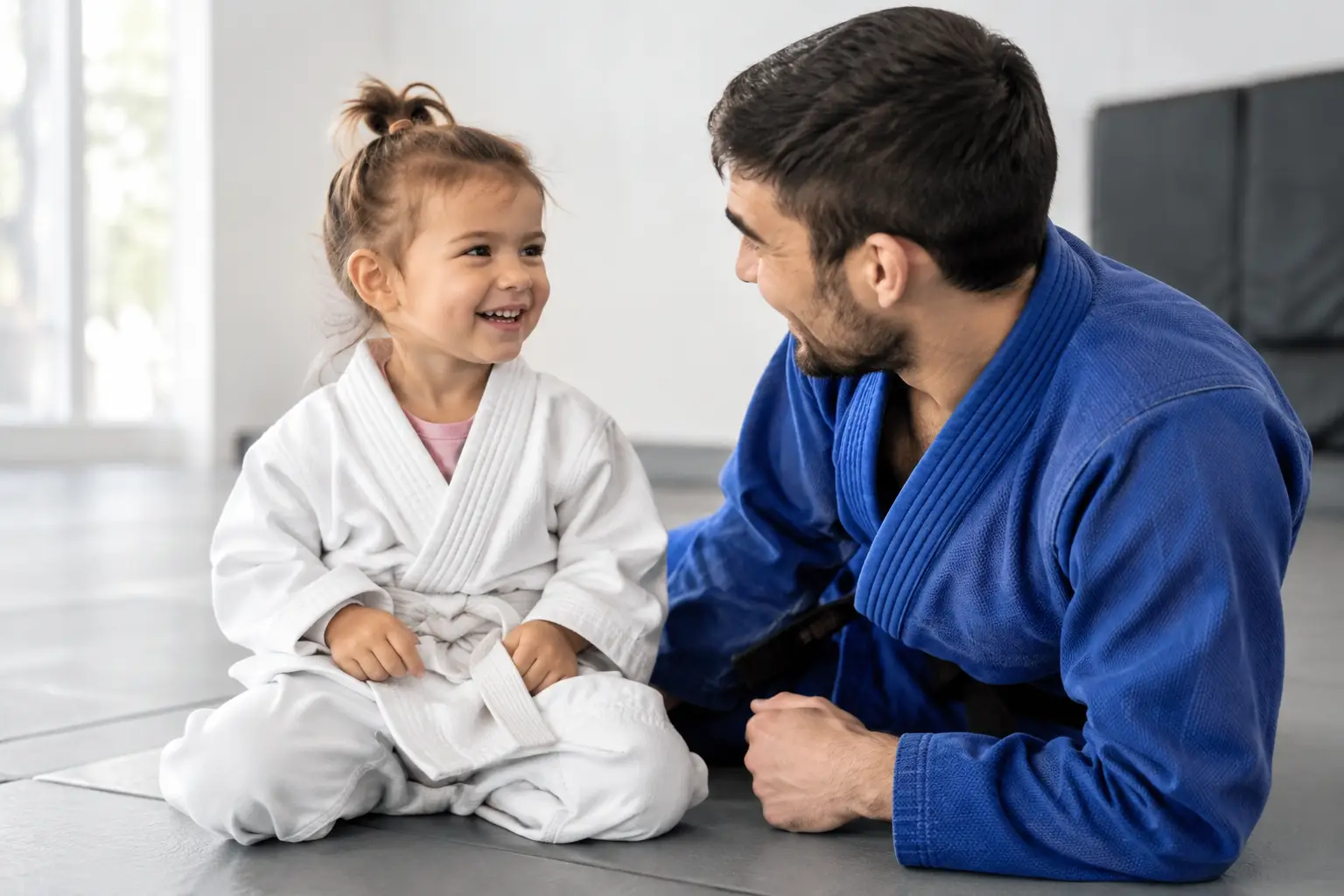
A three-year-old does not need to know how to throw a punch, win a match, or sit perfectly still to begin martial arts. They need a patient coach, a safe structure, and a class that turns movement into confidence. The right Jiu-Jitsu classes for 3 year olds meet children at their developmental level while beginning to build habits that matter far beyond the mat.
For many parents, the question is not whether their child has enough energy. It is whether they are ready to follow directions, learn around other children, and participate safely. The answer depends on the child and the program. A well-run preschool Jiu-Jitsu class is not a miniature adult class. It is a guided environment where young children learn body awareness, listening, respect, and courage through age-appropriate activities.
Are Jiu-Jitsu Classes for 3 Year Olds Worth It?
They can be an excellent investment when the class is designed specifically for ages 3-4. At this stage, progress is measured differently. A child may begin by staying on the mat for the full class, waiting for a turn, using a strong voice, or trying a new drill without tears. Those are meaningful wins.
Brazilian Jiu-Jitsu is especially well suited to teaching young children how to use control instead of chaos. Rather than encouraging wild swinging or aggressive behavior, beginner instruction can focus on balance, safe falling, posture, personal space, and simple movement patterns. Children learn that strength is not the only answer. Listening, positioning, patience, and calm choices have value too.
That does not mean every three-year-old will be ready on day one. Some children need a few visits to warm up. Others thrive immediately in a structured group. A quality academy recognizes that early confidence cannot be forced. Coaches should encourage participation while giving each child a clear, supportive path forward.
What a Preschool Jiu-Jitsu Class Should Look Like
A productive class for this age group moves quickly. Three-year-olds learn through repetition, imagination, and active play, not long technical lectures. A coach might use games that develop coordination and attention, then connect those movements to foundational Jiu-Jitsu skills.
Classes should include a predictable routine. Children often feel more secure when they know what comes next: lining up, greeting the coach, warming up, practicing a skill, playing a supervised movement game, and ending with a positive sendoff. That structure helps turn a busy preschooler into a child who can participate in a group with growing independence.
Skills come before submissions
At age three, the priority is not teaching complicated submissions or asking children to spar intensely. The foundation comes first. Young students can practice how to move on the ground, protect their head, keep their hands to themselves, stand with balance, and follow safety commands.
They also begin to understand respectful physical contact. In a properly supervised setting, children learn that training partners are friends, that tapping or saying "stop" matters, and that rough behavior is not acceptable. These lessons support both mat safety and everyday social development.
Short instruction, plenty of movement
A preschool class should not ask children to stand in line for long periods. Coaches need to keep them engaged with simple drills, clear demonstrations, and frequent encouragement. The goal is focused energy, not exhaustion.
Parents should expect some normal preschool behavior. A child may get distracted, need a reminder, or choose to observe part of the first class. What matters is how the instructor responds. Patient redirection, consistent boundaries, and praise for effort create an environment where children want to return.
Safety Comes From Coaching and Culture
Parents are right to ask how physical contact is handled. Jiu-Jitsu involves close-range movement, so the instructor's experience and class management make a major difference. Preschool students should be grouped appropriately, closely supervised, and taught clear rules from the beginning.
A safe program uses controlled partner activities and avoids forcing children into positions that frighten them. Coaches should watch for mismatched energy levels, correct unsafe behavior immediately, and keep instruction age-appropriate. Clean mats, organized class transitions, and a professional facility also matter because details shape the experience for young children and their families.
At Winners Jiu-Jitsu Academy, the 3-4 program is built around this kind of guided introduction: positive structure, foundational movement, and a culture where children are encouraged to grow with confidence. Elite instruction is not only about competition results. It is also about knowing how to teach the smallest students with patience, precision, and care.
The Benefits Parents Often Notice First
The first changes are usually practical. Parents may see their child become more comfortable separating at drop-off, more willing to try a difficult task, or better able to hear a direction without immediate resistance. These shifts do not happen overnight, and they look different for every child. Still, regular training gives children a place to practice them every week.
Jiu-Jitsu can also help channel physical energy constructively. Preschoolers need opportunities to run, crawl, roll, balance, and use their bodies with purpose. When movement is paired with rules, children begin learning self-control rather than simply being told to calm down.
Confidence is another major benefit, but it should be understood correctly. Real confidence is not a child becoming loud or believing they can overpower everyone. It is the quiet knowledge that they can enter a new room, listen to a coach, recover after a mistake, and keep trying. That kind of confidence carries into school, friendships, and future challenges.
How to Know if Your Child Is Ready
Your child does not need to be naturally athletic or outgoing. They do not need prior sports experience. A few simple signs can indicate that they may benefit from trying a class: they can participate in a short group activity, respond to basic safety directions, and show interest in moving, playing, or learning with other children.
If your child is shy, a trial class can still be worthwhile. Shyness is not a lack of readiness. Some children need time to watch before they join, especially in a new environment. Let the coach know ahead of time if your child is hesitant, has separation anxiety, or has any physical or sensory considerations. Good instructors can make thoughtful adjustments without making the child feel singled out.
If a child is having a particularly difficult day, it is also okay to step back. Martial arts should build a positive relationship with challenge, not become another source of pressure. Consistency matters, but so does meeting a young child where they are.
Helping Your Three-Year-Old Have a Strong First Class
Keep the conversation simple before class. Tell your child they will meet a coach, play movement games, and learn how to be a good teammate. Avoid promising that they will earn a belt right away or insisting they must perform perfectly. The first goal is simply to enter the room, participate at their comfort level, and leave feeling proud.
Arrive a few minutes early so there is no rushed transition. Comfortable athletic clothing and water are usually enough for an introductory session. Most importantly, let the coach lead once class begins. Parents can be a calm source of reassurance, but children often gain confidence faster when they are allowed to connect directly with the instructor and group.
The best first class does not need to be flawless. It only needs to give your child one small reason to come back: a new skill, a friendly coach, a high-five, or the proud feeling of doing something brave on their own.