
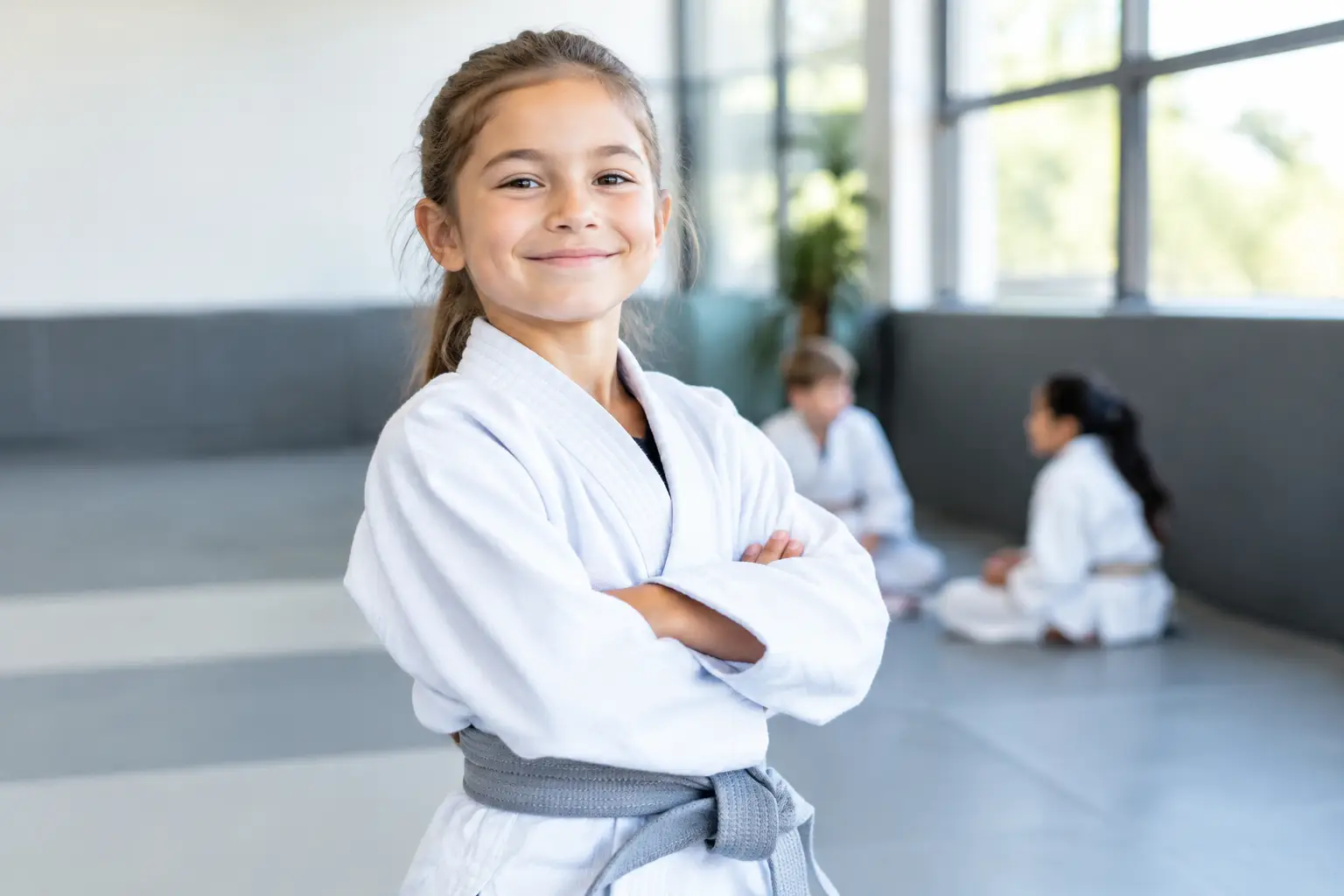
A child who hesitates to join a game, speak up in class, or try something difficult does not need to be told to “be confident” more often. They need repeated proof that they can handle challenge, recover from mistakes, and keep moving forward. The Jiu-Jitsu benefits for child confidence come from that proof, earned one class, one drill, and one small breakthrough at a time.
Brazilian Jiu-Jitsu gives children a structured place to practice physical skills and emotional skills together. They learn to listen, move with purpose, solve problems under pressure, and work respectfully with training partners. For parents in Sunny Isles Beach and across Miami-Dade, it can be a powerful complement to school, family life, and other sports because confidence becomes something a child does, not simply something they feel.
Why Jiu-Jitsu Builds Child Confidence Differently
Some activities build confidence through praise or performance. Jiu-Jitsu builds it through competence. A child learns how to escape a difficult position, maintain balance, use leverage, and stay composed when a training partner creates resistance. The lesson is immediate: a problem can feel uncomfortable without being impossible.
This matters because real confidence is not loudness. A confident child may still feel nervous before a new class, a school presentation, or a tough conversation. The difference is that they have experience taking action while nervous. On the mat, children learn that uncertainty is a normal part of progress.
Jiu-Jitsu is also well suited to children with different body types and athletic backgrounds. It rewards timing, technique, awareness, and persistence rather than relying only on size or speed. A smaller child can experience success against a stronger partner by applying the right movement at the right time. That experience can change how they see themselves.
Progress Makes Success Visible
Children need goals they can recognize. In a quality kids program, progress is not limited to belts. It appears when a 5-year-old follows directions through a full class, when an 8-year-old remembers a sequence independently, or when a shy child volunteers to demonstrate a drill.
Belts and stripes can be meaningful milestones, but the daily wins matter just as much. A coach who notices effort, focus, and respectful behavior teaches children that confidence is built through habits. They begin to understand that improvement is available to them when they show up and practice.
The Jiu-Jitsu Benefits for Child Confidence Under Pressure
A controlled training environment gives children a rare opportunity to face manageable pressure. During partner drills and supervised sparring, they may be held in an uncomfortable position or need to solve a movement problem quickly. The goal is never to overwhelm them. The goal is to help them think clearly, use technique, and ask for help when needed.
That practice can carry into everyday life. A child who has learned to pause, breathe, and work through a difficult round is better positioned to respond calmly when a class assignment feels hard or a social situation becomes stressful. They do not become fearless. They become more capable of functioning despite fear.
Resilience Without Harshness
There is a difference between teaching resilience and simply making children endure frustration. The best kids Jiu-Jitsu classes maintain high standards while giving students clear instruction, appropriate challenges, and support after mistakes. Children should leave training knowing what to improve, not feeling embarrassed for being new.
Sometimes a child will lose a position, forget a technique, or struggle with a more experienced partner. Those moments are valuable when coaches frame them correctly. A setback becomes information: adjust your grip, protect your space, try again. Over time, children stop treating mistakes as proof they cannot succeed.
This is especially helpful for children who avoid activities because they want to be perfect immediately. Jiu-Jitsu makes progress visible, but it also makes effort unavoidable. There is no shortcut around consistent practice. Learning to stay engaged through the beginner stage is a life skill.
Confidence Can Improve Social Skills Too
For many children, confidence is social before it is athletic. They may need practice making eye contact, greeting an instructor, partnering with someone new, or speaking clearly enough to ask a question. A well-run academy creates these small social reps in every class.
Children learn to train with students of different personalities and ability levels. They take turns, share space, respect boundaries, and use self-control even when they are excited. These are simple behaviors, but they build the self-respect that supports healthy friendships.
The community also matters. When children are surrounded by teammates who are working hard, being corrected, and improving together, effort becomes normal. A child who once feared standing out can begin to feel that they belong in a group that values growth.
A Stronger Response to Bullying
Parents often ask whether Jiu-Jitsu helps with bullying. It can, but the answer deserves nuance. Martial arts should never encourage a child to start physical confrontations or use force to settle ordinary disagreements. Strong instruction emphasizes awareness, verbal boundaries, getting help from adults, and avoiding escalation whenever possible.
What Jiu-Jitsu can provide is posture, composure, and practical self-defense awareness. Children who feel more capable are often less likely to project fear or panic when someone tests their boundaries. If a physical situation cannot be avoided, they have a better understanding of control, distance, and how to protect themselves while seeking safety.
Just as important, confident children are often better able to say, “Stop,” walk away, and report what happened. Those are not passive choices. They are disciplined choices.
What Parents Should Look for in a Kids Program
Not every martial arts class develops confidence in the same way. The instructor’s approach, class structure, and safety standards shape the experience. Parents should look for a program that groups children appropriately by age and developmental stage. A 3- or 4-year-old needs different instruction, attention span expectations, and goals than a child preparing for middle school.
Classes should balance technical learning with active movement. Children need enough repetition to build skill, but they also need a pace that keeps them engaged. The room should feel organized, encouraging, and focused. Clear rules and consistent coaching help children feel secure enough to take healthy risks.
It is also worth asking how instructors handle a child who is nervous, frustrated, or reluctant to participate. A confidence-building program does not force a fearful child into the center of attention. It gives them a path forward, then recognizes the courage it takes to use it.
At Winners Jiu-Jitsu Academy, children train in age-specific classes designed to meet them where they are, from early learners through preteens. The standard is serious, but the environment is supportive: students are coached to develop discipline, composure, technical skill, and the belief that they can rise to a challenge.
How Long Does It Take to See a Difference?
Every child develops on a different timeline. Some children become more outgoing after a few classes because they quickly enjoy the structure and movement. Others need several weeks before they feel comfortable separating from a parent, working with partners, or participating fully.
Parents should look beyond instant transformation. Notice whether your child is packing their uniform with more ownership, using stronger posture, talking about a technique they learned, or recovering faster after a hard day. These small changes often come before the bigger ones.
Consistency is more valuable than intensity. Training once or twice a week gives children enough repetition to remember skills and form relationships with coaches and teammates. Adding more classes can make sense for a child who is highly motivated or preparing to compete, but confidence does not require a competition schedule. It requires a steady place to practice growth.
A first class can be a simple, meaningful starting point. Let your child arrive curious rather than pressured to perform. The goal is not to prove they are already confident. It is to give them a place where courage can become a habit.