
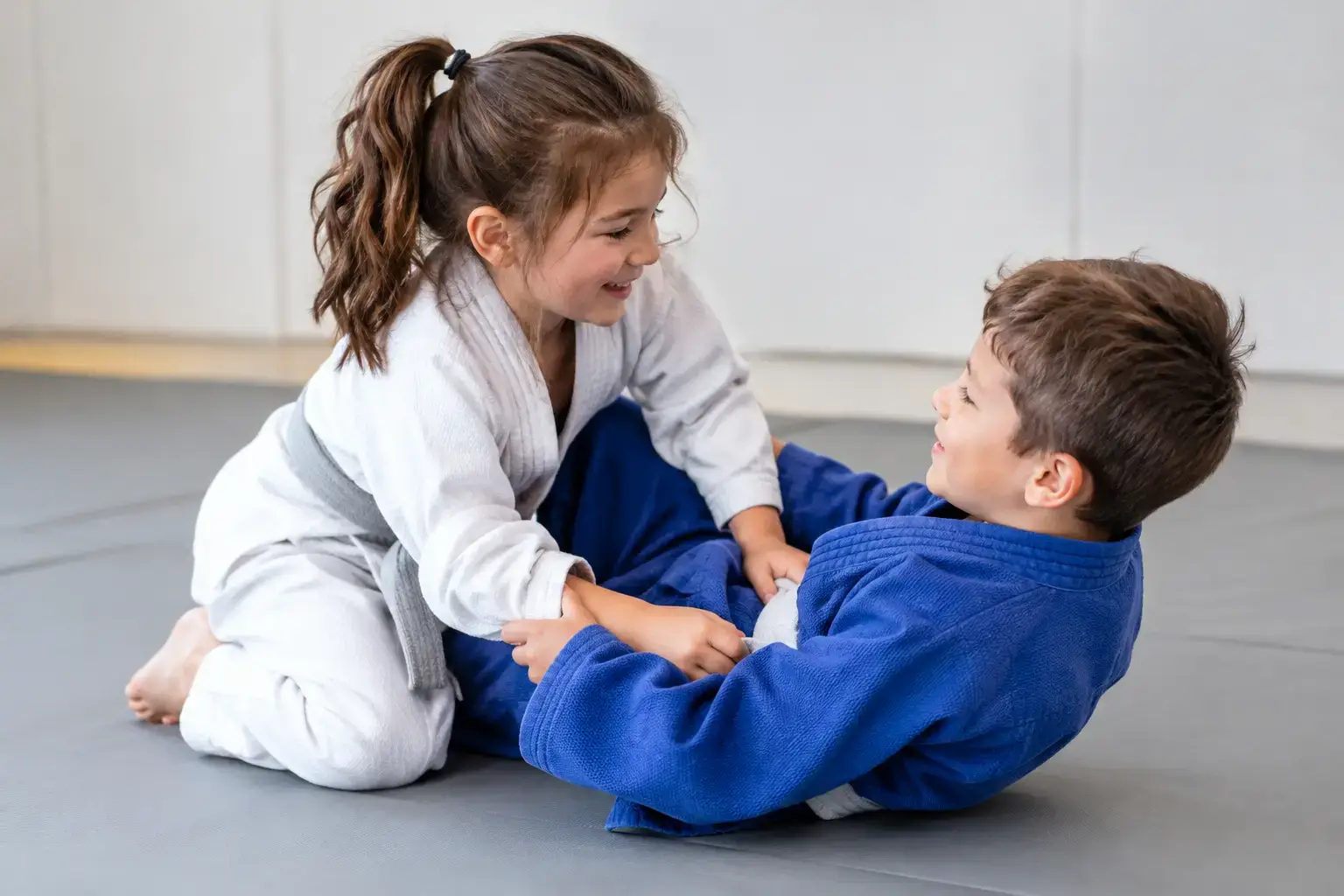
A child comes home from school upset because someone pushed them on the playground. Or maybe they have plenty of energy, but struggle to focus, follow directions, or handle frustration when something does not go their way. For many parents, Brazilian Jiu-Jitsu feels like a promising answer, followed immediately by a reasonable question: is BJJ safe for children?
When it is taught in a structured, age-appropriate program, BJJ can be a safe and highly constructive activity for children. Safety is not accidental, though. It comes from qualified coaching, clear rules, thoughtful class design, clean training spaces, and a culture that values control over toughness.
Brazilian Jiu-Jitsu is not about teaching children to be aggressive. It teaches them how to manage physical situations with balance, awareness, restraint, and composure. Those lessons matter on the mat, at school, and throughout life.
Is BJJ Safe for Children at Different Ages?
A well-run kids' BJJ program should never treat a 4-year-old, a 7-year-old, and a 12-year-old as if they have the same physical abilities or attention span. Age grouping is one of the most important safety measures in youth martial arts.
For children ages 3 to 4, classes should be movement-based and closely supervised. The focus is on coordination, listening, taking turns, body awareness, and simple games that introduce martial arts structure. At this age, children are not expected to perform advanced techniques or participate in hard sparring.
Kids ages 5 to 7 can begin learning basic positions, controlled escapes, simple takedown mechanics, and partner drills. They still need frequent reminders about personal space, using gentle pressure, and stopping immediately when an instructor gives a command. Classes should remain active, positive, and carefully organized.
By ages 8 to 12, children can understand more technical concepts and develop better control with partners. They may participate in supervised live training, often called rolling, but intensity should match their maturity, experience, size, and skill level. A responsible coach does not simply pair children up and tell them to fight.
At Winners Jiu-Jitsu Academy, age-specific instruction helps children develop step by step rather than being pushed into a class that does not fit their stage of development.
What Makes a Kids' BJJ Class Safe?
BJJ has a reputation for being practical because it teaches control at close range. Unlike striking-focused activities, children can learn how to establish position, escape a hold, or create distance without relying on punches or kicks. That does not make it risk-free, but it does mean the sport can be taught with a strong emphasis on controlled contact.
The instructor sets the standard. In a quality program, coaches actively watch every pair, correct unsafe behavior quickly, and make sure children train with appropriate partners. Size, temperament, skill level, and confidence all matter. A newer child may need a calm, cooperative partner rather than another beginner who is moving too fast.
Safe kids' classes also teach rules before intensity. Children should learn to protect their training partners, avoid dangerous movements, respect physical boundaries, and stop when told. They should understand that taps, verbal signals, and coach instructions are not optional. They are part of the discipline.
The physical environment matters as well. Mats should be clean and properly maintained. Students should keep fingernails and toenails trimmed, wear clean uniforms or athletic clothing, and stay home when they are sick or have a contagious skin condition. These basic habits protect the whole team.
The Real Risk: Poor Supervision and Poor Culture
No sport is completely free of injury. Children can get bumps, bruises, sore muscles, and the occasional sprain in BJJ, just as they can in soccer, basketball, gymnastics, or playground activities. The goal is not to pretend that risk does not exist. The goal is to reduce avoidable risk through intelligent instruction.
The greatest concern is not BJJ itself. It is an environment where children are encouraged to win at all costs, bigger students overpower smaller ones, or coaches allow rough behavior to continue unchecked. Parents should be cautious if they see children training without supervision, being pressured into techniques they do not understand, or treated as though pain is a badge of honor.
A healthy academy culture teaches the opposite. It tells children that control is strength. It rewards good partners, calm decision-making, and respect for the rules. It makes room for a child to ask questions, take a break, or tell an instructor when something feels wrong.
How Coaches Reduce Injury During Training
Kids do not need adult-level techniques or adult-level intensity to benefit from BJJ. Strong youth instruction is selective. Coaches choose techniques that build useful skills while limiting unnecessary stress on growing bodies.
For example, beginners spend time learning how to fall safely, maintain balance, move from the ground, and use leverage instead of force. They drill at a measured pace before trying a movement with resistance. When live training is introduced, rounds are typically short, closely monitored, and matched to the student's experience.
Certain submissions and positions require extra care with children. Responsible coaches establish clear restrictions based on age and program standards, teach children not to crank or force a movement, and intervene immediately when control is lost. Technical progress always comes before competitive pressure.
This approach benefits confident children and cautious children alike. A naturally athletic child learns restraint and responsibility. A shy child learns that they can participate safely, communicate clearly, and solve problems without panic.
Why BJJ Can Be Safer Than Parents Expect
Many parents hear the words “martial arts” and picture children throwing punches. Brazilian Jiu-Jitsu is different in its central lesson: stay calm, use position and leverage, and avoid unnecessary harm.
That is especially valuable for children who face social pressure, conflict, or bullying. BJJ does not promise that a child will never encounter a difficult situation. It gives them a more grounded response. They learn body awareness, situational awareness, and the confidence to speak up without feeling the need to prove themselves through aggression.
The emotional safety of the class can be just as meaningful as the physical safety. Children learn to lose a round, make a mistake, reset, and try again. They learn that progress comes from patience and practice, not from being the strongest person in the room. For a child navigating school, friendships, and growing independence, that resilience is powerful.
What Parents Should Look for Before Enrolling
The best way to decide whether BJJ is right for your child is to watch a class and ask direct questions. Pay attention to how the instructor speaks to students. Are corrections calm and specific? Do children appear engaged rather than intimidated? Is there enough coaching attention for the size of the group?
Ask how students are grouped, how new children are introduced to live training, and what safety rules apply to submissions and takedowns. You can also ask what happens when a child is nervous, frustrated, or paired with someone much larger. Clear answers usually reflect a clear system.
Your child should not need to be naturally athletic, outgoing, or competitive to begin. The right program meets them where they are. Some children are ready to race onto the mat. Others need time to observe, build trust, and take small wins. Both paths can lead to meaningful growth.
Helping Your Child Train Safely and Confidently
Parents play an important role in setting the tone. Encourage your child to listen closely, train with care, and tell their coach if they are hurt or uncomfortable. Avoid focusing only on medals, stripes, or whether they “won” during class. Ask what they learned, who they helped, or what felt challenging.
Consistency matters more than intensity. One or two classes each week can give a child time to build skill, friendships, and confidence without feeling overwhelmed. Good sleep, hydration, clean gear, and communication with coaches all support a safer experience.
If your child has a medical condition, prior injury, sensory concern, or developmental need, speak with their pediatrician and the academy before starting. Many children can participate successfully with the right accommodations, but coaches need the information to guide them well.
A safe BJJ class should leave a child tired, proud, and eager to improve - not afraid to return. When coaching is skilled and the culture is disciplined, the mat becomes a place where children learn to protect themselves, respect others, and meet challenges with calm confidence.