
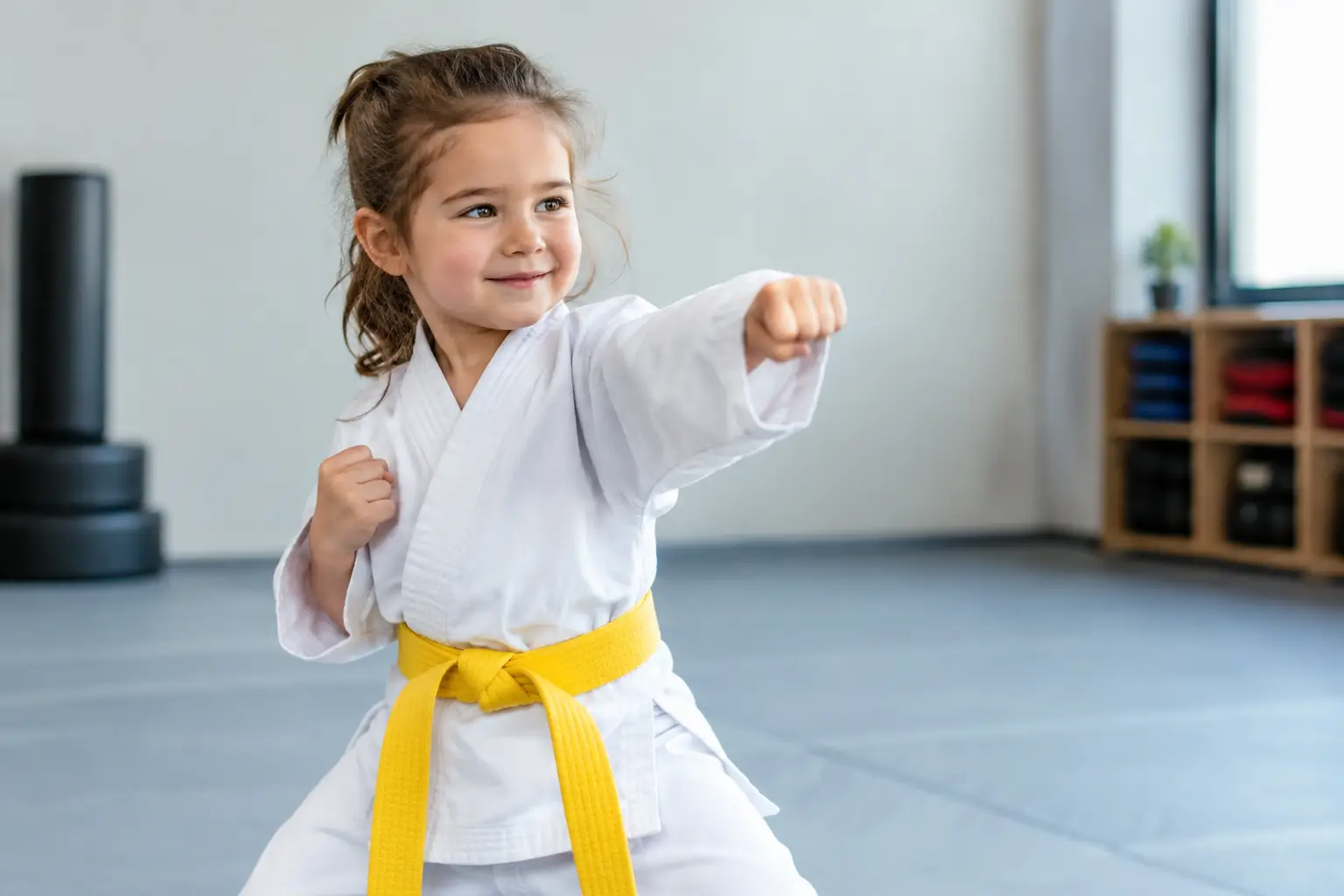
A 5-year-old does not need a harsh workout, a complicated fighting system, or pressure to win trophies. They need a class where they can move, listen, practice courage, and leave feeling proud. The best martial art for a 5 year old is the one taught in a safe, age-appropriate setting by instructors who understand early childhood development.
At this age, the quality of the program matters at least as much as the style. A great children’s martial arts class turns learning into purposeful play while quietly building skills that carry into school, friendships, and family life.
What a 5-Year-Old Needs From Martial Arts
Five-year-olds are energetic, imaginative, and still developing coordination and attention span. They learn best through short activities, clear routines, positive repetition, and immediate encouragement. A program designed for older children may ask too much too soon, while a well-structured age group gives young students room to succeed.
Look for classes that balance movement with structure. Your child should run, crawl, balance, fall safely, and practice simple techniques, but they should also learn how to line up, take turns, follow directions, and control their body around others. Those small moments of discipline are often where the biggest growth begins.
Safety also has to be visible. Instructors should actively supervise partner work, teach appropriate contact, and make sure size and maturity are considered when children train together. A child can learn real self-defense foundations without being exposed to hard sparring or unnecessary impact.
Is Brazilian Jiu-Jitsu the Best Martial Art for a 5 Year Old?
For many families, Brazilian Jiu-Jitsu is an excellent choice because it teaches children how to manage distance, balance, movement, and body control without relying on punches or kicks. Young students learn how to fall, escape, hold a safe position, and work through a challenge calmly. It is physical, engaging, and naturally suited to kids who enjoy active learning.
BJJ can also be especially valuable for confidence. A smaller child learns that strength is not the only answer. Position, timing, posture, and composure matter. That lesson can change how a child carries themselves in everyday situations, including moments when they feel intimidated or left out.
That does not mean every 5-year-old will immediately love grappling. Some children prefer the space and rhythm of striking arts, while others need a few classes to become comfortable with close-contact activities. The right school introduces Jiu-Jitsu gradually, keeps instruction upbeat, and never forces a nervous child into a situation before they are ready.
How Other Martial Arts Compare
Karate and taekwondo can be strong options for young children, particularly when parents want a program centered on forms, kicking, focus, and visible belt progress. Many kids enjoy the clear routines and the excitement of practicing strikes in the air or on pads. A well-run traditional program can build respect, coordination, and listening skills.
Kickboxing develops athletic movement, balance, and confidence with striking. For a 5-year-old, however, the class should focus on controlled drills, footwork, pads, and awareness rather than contact sparring. It can be a great fit for children who love fast-paced movement and need a positive outlet for energy.
Judo shares several benefits with Jiu-Jitsu, especially balance, safe falling, and controlled grappling. Its emphasis on throws can be exciting, but children need careful coaching and proper mats. Wrestling programs can also develop toughness and coordination, although the culture and age-specific instruction vary widely from one program to another.
No style automatically creates confidence or discipline. The instructor, class environment, and curriculum determine whether a child feels challenged in a healthy way or overwhelmed. For most 5-year-olds, the best choice is not the art with the toughest reputation. It is the one that makes them eager to return while teaching useful habits with consistency.
Five Signs You Have Found the Right Class
A strong trial class reveals more than a website or a list of belt ranks. Watch how the coach speaks to the children, how students treat one another, and how your child responds when an activity becomes difficult.
First, the instruction should be simple and age-specific. Young children should not spend long stretches standing still while adults explain advanced details. They need one clear task at a time, repeated often enough to understand it.
Second, the atmosphere should be encouraging without being chaotic. Children should have fun, but fun does not mean no structure. A good class has expectations: eyes on the instructor, kind hands, respectful words, and effort from start to finish.
Third, coaches should correct behavior with patience and confidence. A 5-year-old may get distracted, become frustrated, or need help separating from a parent. Those are normal moments. Skilled instructors bring the child back into the activity without embarrassment or yelling.
Fourth, the program should teach practical physical skills. Look for balance, coordination, body awareness, safe falling, simple escapes, and controlled partner drills. These are more meaningful than flashy moves that a child cannot remember or use responsibly.
Finally, your child should leave with a sense of accomplishment. They do not need to perform every drill perfectly. They should feel that they tried something new, received encouragement, and earned their place in the room.
Confidence Is Built Through Small Wins
Parents often enroll a child because they want more confidence, but confidence is not something an instructor can simply announce into existence. It grows when a child faces a manageable challenge, stays with it, and realizes, “I can do this.”
Maybe that challenge is stepping onto the mat without a parent. Maybe it is learning to break a fall, listening through an entire drill, or working with a new partner. Each success becomes evidence that the child can handle discomfort without quitting.
Martial arts also give children a language for self-control. They learn to pause before reacting, respect personal space, and use their voice when something feels wrong. In a quality program, self-defense is not presented as permission to fight. It is taught as awareness, confidence, boundaries, and the ability to seek help when needed.
What Parents Can Do Before the First Class
Set simple expectations before you arrive. Tell your child they will meet a coach, play movement games, practice listening, and try something new. Avoid promising that it will be easy or saying they have to be the best. The goal is to be brave enough to participate.
Dress them in comfortable athletic clothes unless the academy provides a uniform. Bring water, arrive a few minutes early, and let the instructor know if your child is shy, has sensory sensitivities, or is adjusting to a new environment. Good coaches appreciate that information because it helps them guide the first experience well.
After class, ask specific questions instead of only asking whether they had fun. Ask what game they played, what they learned, or who helped them. Praise effort, focus, and kindness more than natural talent. This reinforces the exact mindset martial arts is meant to develop.
Choose the Program, Not Just the Name
The best martial art for a 5 year old is ultimately the program that matches your child’s personality and gives them room to grow. A shy child may thrive in the steady routines of Jiu-Jitsu. An energetic child may light up during kickboxing drills. A child who loves tradition may connect with karate or taekwondo.
What matters most is a clean, well-supervised academy with patient instructors, an age-specific curriculum, and a culture where children learn respect alongside skill. At Winners Jiu-Jitsu Academy, the goal is bigger than teaching a child a technique. It is helping them build the composure, discipline, and courage to meet life’s challenges with confidence.
Your child does not need to walk in as a champion. They only need a place where taking one brave step onto the mat becomes the beginning of something lasting.