
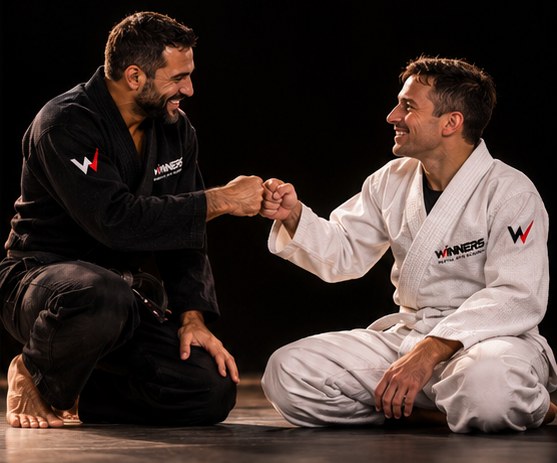
Kids who train get the most out of class when the basics are in place: a regular bedtime, a water bottle in the bag, a simple snack they're used to, screens put away at night, and clean gear. None of this needs to be complicated. A few steady routines at home make training easier, safer and more fun for your child.
For specific questions about how much sleep, food or fluid your child needs, your pediatrician is the right person to ask. What we can share is what we see on the mat every week, and the small habits that help kids show up ready.
Why We Talk About Health Habits at the Academy
Our kids program follows a Character Development Program. Each month focuses on one virtue: Discipline, Courage, Respect, Resilience, Anti-Bullying and Health Habits.
During Health Habits month, coaches bring the topic into class, and kids take home a one-page homework sheet with 4 questions about the virtue. It's quick, it isn't extra work for parents, and it counts toward the next belt. Many parents tell us the sheet is a nice excuse to talk about bedtime or water without it feeling like a lecture.
The point isn't perfection. It's helping kids notice that how they live during the week shows up in how they feel on the mat.
Sleep: The Habit That Makes Every Other Habit Easier
A tired kid has a harder time listening, remembering a new technique and staying calm when a drill gets tough. You don't need a complicated plan. You need consistency.
Simple sleep routines that work for families
- Same bedtime on training nights. Class ends at a predictable time, so bedtime can be predictable too.
- A wind-down routine. Shower, pajamas, a book, lights out. The order matters less than doing it the same way.
- Pack the bag the night before. Water bottle, flip-flops, clean uniform. Fewer rushed mornings and fewer forgotten items.
- Watch for signs. If your child is cranky, foggy or unusually emotional in class, sleep is often the first thing worth checking.
If you have concerns about your child's sleep, talk to your pediatrician.
Water: Bring a Bottle Every Single Class
When families book a free trial, we tell them to bring only two things: water and flip-flops. We lend the gi and gloves. That tells you how important that water bottle is.
Jiu-Jitsu and Kickboxing classes start with a warm-up of coordination, movement drills and conditioning, so kids get moving fast. Here in South Florida, it's warm most of the year, and kids sweat.
Easy hydration habits
- Label the bottle with your child's name. Bottles get mixed up.
- Fill it before you leave home, not in the car on the way.
- Teach kids to drink at breaks. Coaches give water breaks during class. Encourage your child to actually use them.
- Make it their job. Older kids (8 to 12) can be in charge of packing and refilling their own bottle. That's the Health Habits virtue in action.
Food Basics: Keep It Simple and Familiar
We're coaches, not nutritionists, so we won't hand out diet plans. What we can say from experience is that kids tend to feel better on the mat when they aren't starving and also haven't just finished a big meal.
Practical ideas
- Plan the timing. If your 5-7 year old trains at 5:00 PM, think about when they last ate and whether a light snack earlier makes sense for your family.
- Stick to foods they already know. Training day isn't the time to try something new.
- Have dinner ready to go after class. Hungry kids plus a long wait for dinner equals a rough evening.
For anything specific to your child, such as allergies or energy concerns, ask your pediatrician.
Screen Time: Protect the Evening
Screens aren't the enemy, but they can easily eat up the time between class, homework, dinner and bed. Here's a pattern a lot of families find workable.
How a kid's training week can fit together
Say you have an 8-year-old in Kids Jiu-Jitsu, ages 8-12. That class runs at 5:50 PM, Monday through Friday, for 50 minutes. A family might choose three days, for example Monday, Wednesday and Thursday:
- Before class: homework, a snack, pack the bag.
- 5:50 to 6:40 PM: class. No phone, no tablet, just training.
- After class: shower, dinner, a little free time.
- Screens off at a set time, then the bedtime routine.
On non-training days, the same evening rhythm keeps things steady. Some families use class as a natural break: the tablet goes in the drawer when the bag comes out.
Kids who also want to try striking can combine Kids Jiu-Jitsu with Kids Kickboxing (ages 8-12, Monday and Wednesday at 5:00 PM). If you go that route, a consistent evening routine matters even more.
Hygiene: Good Habits Protect Everyone on the Mat
Jiu-Jitsu is a close-contact sport. Clean habits are part of being a good training partner, and kids pick this up quickly when it's part of the routine.
A simple hygiene checklist
- Clean uniform every class. Wash it after each session. A gi that sat in the bag overnight is not ready.
- Short fingernails and toenails. Check them weekly. Long nails scratch partners.
- Long hair tied back.
- Flip-flops off the mat. Wear them when walking around the academy and to the bathroom, then take them off before stepping on the mat. Bare feet stay clean that way.
- Cover small cuts before class.
- Shower after training.
- Stay home when sick. If your child isn't feeling well, rest first. Missed classes can be made up at another time.
Training Locally in Sunny Isles Beach and Aventura
Winners Jiu-Jitsu Academy is at 17100 Collins Ave, Unit 201, Sunny Isles Beach, FL 33160. Families come from Sunny Isles Beach, Aventura, Bal Harbour, Golden Beach and North Miami Beach. If you live in North Miami Beach, you can learn more on our Jiu-Jitsu near North Miami Beach page.
Kids classes are grouped by age, which makes routines easier to plan:
- Ages 3-4: Monday and Wednesday at 4:15 PM, Tuesday and Thursday at 5:00 PM (45 min)
- Ages 5-7: Monday through Friday at 5:00 PM (45 min)
- Ages 8-12: Monday through Friday at 5:50 PM (50 min)
- Kids Kickboxing, ages 8-12: Monday and Wednesday at 5:00 PM (50 min)
- Saturday, ages 6-12: 10:00 AM (60 min)
Our head coach, Professor Jonatas Gurgel, leads a team that speaks English, Portuguese, Spanish and Russian, which many local families appreciate.
What Your Child's First Class Looks Like
If your child is new, here's the plan:
- Arrive 10 minutes early and sign the waiver online or at the front desk.
- Bring water and flip-flops. We lend the gi or gloves for free.
- The front desk introduces your child to the coach.
- Class runs in three parts: warm-up, technique and drills, then technical and situational sparring.
- You can watch from outside the mat.
- After class, the coach gives feedback and the front desk explains the plans.
Please note there are no free trial classes on Saturday, so pick a weekday for the first visit.
Try a Free Class
Good habits are easier to build when there's a reason to build them. A regular class gives your child that reason. Whether you're in Sunny Isles Beach or North Miami Beach, the first class is free. Book your child's free trial class here and we'll help you find the right age group.